

30 March 2026
Pothole damage: are you missing out on compensation?
3 minutes
Potholes are more than just an everyday annoyance: they’re now one of the biggest hazards on UK roads. And with many councils struggling to keep up with repairs, the problem is accelerating. A new report puts the cost of fixing England and Wales’s worn-out local roads at a staggering £18.6 billion. Only 51% of the network is considered to be in “good condition”. The rest will have you relying on your vehicle’s suspension.
And with national and local budgets stretched thin, road repairs simply aren’t topping the priority list. So this is our friendly PSA: you might not be able to control the road… but you can control your protection. That’s why we’re looking at where potholes are worst, where people are successfully claiming compensation – and how motor legal expenses cover can help you reclaim costs when the roads let you down.
How bad have roads become?
One insurer’s research paints a pretty painful picture:
- 92% of drivers in England say potholes affect them daily
- 79% have suffered pothole damage in the last five years
- Repair costs are up 61% over five years
- Pothole‑related claims typically surge 33% between November and December
- They spike another 79% between December and January
- The overall cost of claims has climbed 55% since 2020
That’s a lot of cash disappearing into the pothole problem.
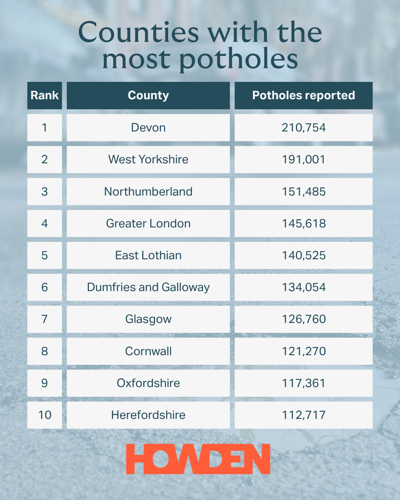
Where are the pothole hotspots?
Drivers aren’t just dodging potholes – they’re struggling to claim back money for damage. The rate of successful reimbursement has fallen to its lowest on record, with a national approval rate of just 19%. Some regions fare even worse. Devon tops the “ouch” list, but only 15% of claims there were approved. West Yorkshire wasn’t far behind – and councils there accepted just 11% of damage reports.
Where are drivers actually getting compensation?
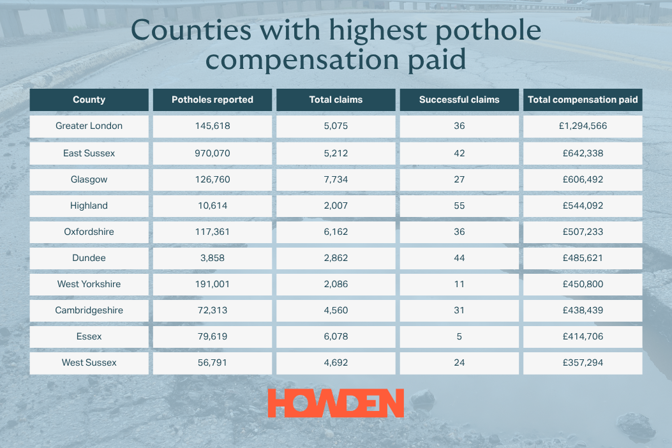
Over three million potholes have been reported in the past four years alone. But in some areas, drivers are getting help. Interestingly, the worst areas for potholes aren’t always the most generous. These regions paid out the most compensation between 2022 and 2025:
How do you report a pothole?
If your vehicle gets damaged, here’s the simplest route to making a claim with your council or National Highways:
1. Record everything
Take note of the exact location, direction of travel, date, and time. Take photos of the pothole, showing depth or scale, and plenty of your vehicle damage.
2. Report it to the right authority
- Motorways and major roads: National Highways
- Local roads: the relevant council
3. Get a repair quote
If you’ve already paid for repairs, hang on to every receipt. If not, get a clear quote that sets out the cost. Councils won’t consider compensation unless they can see what you’ve lost.
4. Submit your formal claim
Head to your local authority’s website and follow their process. Include your evidence, repair costs (or estimates), and a clear description of what happened.
5. Wait for a response
If your claim gets rejected, don’t panic – and don’t give up straight away. Ask for the council’s road inspection records. If they missed a scheduled check or ignored a pothole that had already been reported, you may have grounds to appeal. It’s not always an easy process. But it is worth trying, especially in areas that historically approve compensation.
Where does your insurance fit into all this?
Claiming via your insurance is typically an easier process than via your council. But you need to weigh up the cost of the damage, your excess and how it could affect your no-claims bonus. You also cannot claim twice, so you must decide whether to go via the local authority or insurance. If you did try and claim both, a legal technicality means anything you got from the council would be paid to your insurer.
So how should you make that decision? Going the insurance route might be best if the damage is serious and the repair bill is much higher than your excess. It’s also worth it if critical parts of your vehicle need replacing – like the suspension or steering components. This is where Motor Legal Expenses Insurance can really pull its weight. Motor legal protection (legal cover) helps you recover losses when an incident wasn’t your fault, including pothole damage with many policies. And with the state of the roads at the moment, motor legal protection can give you the support you deserve when the road surface lets you down.
It can also cover:
- Loss of earnings
- Your policy excess
- Legal fees
- Travel costs or hire car costs
- Personal injury support
- Replacement vehicle costs
- Disputes about the Motor Insurance Database
- Damage to personal possessions
Much like a claim to your local authority, you’ll need to inform your insurer of the same details from the incident, as well as keeping a record of the repair costs. If you lost out on work as a result of not having your vehicle or had to use a hire car/other transport costs, keep track of all these expenses too. An insurance broker, such of Howden, can support you through the claims process by cutting through the jargon, gathering the right evidence with you, and helping to make sure your claim has the best possible chance of success.
If you’re not sure whether your current motor policy includes legal protection for pothole damage, we’re here to help. Our Howden experts can check your cover, help you understand your options, and support you if you ever find yourself on the wrong side of a nasty bump in the road.
Sources: The Independent, Department for Transport, The Mirror, Which?. Pothole data via Confused.com.