

30 March 2026
Could solar panels help or hinder your house sale?
3 minutes
More than 1.9 million UK homes now have solar panels. And with new-build standards likely to make them even more common, the chances of moving into or out of a solar-powered home are rising fast. Panels can cut bills, boost a property’s green credentials and make day-to-day living a little cheaper. But they also come with paperwork, permissions, and the occasional curveball. Whether you’re buying or selling, here’s what to look out for – and how to keep your move running smoothly.
Age and condition: the first thing buyers should check
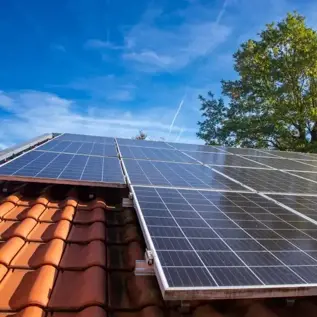
Solar panels can last 25 years or more, but they don’t stay at peak performance forever. A quick visual check can tell you a lot. Buyers should look for:
- Cracked panels
- Shading from new trees or extensions
- Corroded mounts
Most modern systems track their performance online, so buyers should ask for access to recent generation reports. If numbers are dipping, it might mean repairs – or a replacement inverter is in order. Inverters – which make the electricity generated by solar panels usable for your household – typically last 8–12 years. If the system is more than a decade old, it’s worth budgeting for a new one. Sellers should flag this early to avoid renegotiations later, although they may not know this themselves so it’s worth asking.
The age of the solar panels will also affect Feed-in Tariffs (FiT), and how they earn payments for electricity exported to the grid. For systems installed before 2019, you may still receive payments. More modern installations fall under the Smart Export Guarantee (SEG) scheme. Rates vary between providers, so buyers could shop around for the best deal after completion.
Ownership: a surprisingly big factor in property value and stress levels
Whether you own or lease your solar panels can make or break a deal. Owned panels usually mean great news for everyone. The buyer gets the energy savings. If the system was installed before March 2019, they may also inherit Feed‑in Tariff (FiT) payments (as long as the original agreement allows it).
From a mortgage perspective, most lenders are happy with owned systems. Panels can even boost a property’s EPC rating, which some lenders love to see. Leased panels are where things can get complicated. Many early installations were based on “free solar panel” deals, where homeowners leased their roof space to a company that installed the panels and collected the FiT payments. That means that a third party still owns the panels, which the buyer inherits.
Gareth Lowman, Director at SPF Private Clients, part of Howden, explained; “Where the panels are leased (Lease of Rights or Airspace) your solicitor will need to confirm to the lender that the lease meets the minimum requirements documented in the UK Mortgage Lenders Handbook. And if it doesn’t, the property will be deemed unsuitable and your mortgage offer could be withdrawn, unless a deed of variation is entered into on or before completion.” If the original company has since folded (not uncommon), sellers may not even know who owns the lease. In these cases, Ofgem can help via an Ownership Register Query or Subject Access Request.
Buyers should always ask to see the solar panel lease early, and sellers, if you don’t have a copy, your solicitor may be able to retrieve it from the Land Registry.
Paperwork: the make-or-break moment for solicitors
This is where solar panels can slow a sale, as alluded to above. The right documents don’t just show the system is safe – they also keep mortgage lenders, insurers and energy suppliers happy.
Buyers should ask for:
- MCS certificate – proves the installer and products meet UK standards.
- DNO approval – permission from the Distribution Network Operator.
- Electrical installation certificate – confirms the wiring is compliant.
- Panel and inverter warranties – and whether they transfer to new owners.
- Proof of ownership – critical if FiT payments apply.
- Building Control approval – particularly for older systems.
Sellers, having this bundle ready speeds up conveyancing and reassures buyers immediately.
Gareth continued: “When a valuer visits, they won’t just look at the roof – they’ll be asked to comment on two specific points: whether the panels affect the future marketability of the property, and whether they’ve had any impact on the structural integrity of the home. “In reality, it’s rare for solar panels to cause concerns in either area, but it’s still part of the process. So having your paperwork in order and evidence of a proper installation can make that valuation step smooth and stress-free.”
Insurance: make sure the panels are properly protected
Not all home insurance policies treat solar panels the same way. Most insurers cover panels as part of the building, but this may mean you need to increase the buildings sum insured to take into account the additional value of the solar panels. What’s more, some insurers also treat the battery and the panels differently – listing the battery under contents, while the panels sit under buildings insurance
Other insurance factors to check:
- Are panels covered for storm damage?
- Is the inverter included? (Some insurers treat it as separate equipment.)
- Was the roof strong enough for the installation?
- Were the mounting systems installed with proper weatherproofing?
Do solar panels help or hinder a home move?
Solar panels can absolutely help make a property purchase happen, as lower bills are a big draw for today’s buyers. But without the right documents, clarity on ownership, and an insurer who understands solar installations, they can also delay a sale – or scupper a mortgage.
The good news is that with the right support, everything becomes much simpler. Whether you’re buying or selling, Howden can help make sure your solar panels are properly insured. And if you need mortgage advice or have questions around lenders, SPF Private Clients can help you.
Sources: Irwin Mitchell, Energy Saving Trust, Department for Energy Security and Net Zero, The Independent, The Property Buying Company.