

28 April 2026
What really happens when your luggage goes missing and how to get it back
3 minutes
Few travel moments sink the heart faster than standing at baggage reclaim while everyone else wheels off into the sunset. The good news is that lost luggage is less common than it used to be. And when it does happen, you’ve got more rights (and more options) than you might think.
Here’s what’s really going on with lost baggage in 2026, and what to do if your suitcase decides to take a holiday of its own.
How much luggage goes missing?
Despite record-breaking travel numbers, baggage handling is improving. In 2024, airlines carried 5.3 billion passengers, yet only mishandled 33.4 million bags. That seems like a lot, but it’s just 6.3 bags per 1,000 travellers. That’s an 8.7% improvement year on year. Compare that to 2007, when 46.9 million bags went missing across fewer than half as many passengers.
And here’s the most reassuring stat of all: 66% of mishandled bags were reunited with their owners within 48 hours. So, while lost luggage makes headlines (and horror stories), most cases are short-lived.
Is your bag lost or delayed?
In reality, 74% of baggage issues are delays, not permanent losses. Though that’s a bitter pill when missing luggage ruins your holiday.
The biggest culprit is transfers. Around 41% of delayed bags happen when luggage has to move between flights, especially on tight connections or between different airlines. Other causes include:
- Bags not being loaded (17%).
- Ticketing or tagging errors (16%).
- Weather, customs and airport capacity issues (10%).
Truly lost or stolen bags account for just 8% of cases. Damaged or pilfered luggage makes up the rest.
What should you always pack in your hand luggage?
While it’s a positive sign that fewer bags are getting lost in transit, there’s always that voice in the back of your mind… “what if my bag goes missing?” If there’s one golden rule of stress-free travel, it’s this: never check in anything you can’t cope without for 48 hours.
That includes:
- Medication and medical equipment.
- Travel documents, chargers and electronics.
- A change of clothes and basic toiletries.
- Anything valuable or sentimental.
The good news for UK travellers is that you can keep liquids in your cabin bags at most airports now, so no more scrambling before you go through security. And at Heathrow, Edinburgh and Birmingham, the 100ml rule has been scrapped thanks to new CT scanners. This rule isn’t in place everywhere yet though, so always check before you fly.
Tips for keeping track of your luggage
You can’t control the weather. Or airport strikes. But you can stack the odds in your favour.
Before booking
- Choose direct flights where possible.
- Favour airlines and airports with strong baggage records (check out www.luggagelosers.com for live updates).
- Consider travelling with hand luggage only on short trips.
When packing
- Put an ID card inside your suitcase, not just outside.
- Use a clear luggage tag and a visual identifier like a ribbon or band.
- Photograph your bag and its contents.
- Keep receipts for valuables.
- Consider a Bluetooth tracker. It could be helpful, but it’s not a magic ‘fix-all’.
At the airport
- Check the destination code on your baggage tag.
- Remove old tags from previous trips.
- Take a quick photo of your checked bag.
If your bag doesn’t arrive:
- Report it immediately at the airline’s baggage desk (or online before you leave the airport).
- File a Property Irregularity Report (PIR) and keep the reference number.
- Provide photos, tag numbers and contact details.
Most airlines will then track and return your bag to you, at no cost, whether you’re on holiday or back home.
What compensation can I claim?
If your bag is delayed, airlines must reimburse you for reasonable essentials, such as toiletries, basic clothing, and similar items. Keep itemised receipts, as you should expect scrutiny.
After 21 days, luggage is classed as officially lost. Under the Montreal Convention, compensation is capped at around £1,533. That’s the maximum, and only if you can prove the value of what you lost with receipts and purchase history. Which brings us to insurance…
Where travel insurance really helps
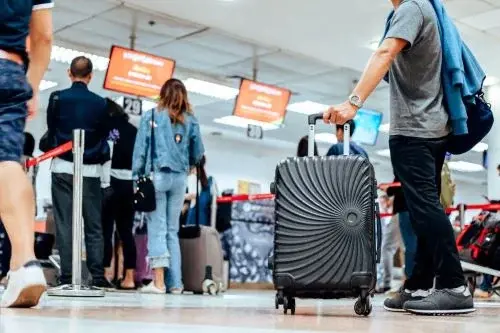
Airlines have responsibilities when your luggage goes missing. But they don’t cover everything. That’s where travel insurance steps in. A good policy can help cover delayed, lost or damaged luggage, including essential replacement items.
Cover varies by policy, but many travel insurance policies typically offer total cover of around £1,000 to £3,000, with a single item limit in place. That means you could claim up to £1,500 overall, but no more than £300 for any one item, unless you’ve added extra cover. It’s why checking limits (and insuring higher value items properly) matters.
Lost luggage is frustrating. But it’s rarely the worst-case scenario, especially if you pack sensibly, know your rights and make sure you’ve got cover that backs you up when plans go sideways.
Whether you travel regularly, or just want peace of mind for your next break, Howden’s travel insurance advice can help protect your bags, your budget and your trip.
Find your nearest branch and speak to your local team.
Sources: Which?, The Independent, LuggageLosers, Citizens Advice, SITA.