

28 August 2026
Learning to drive later in life? Why age can affect your chances of passing
3 minutes
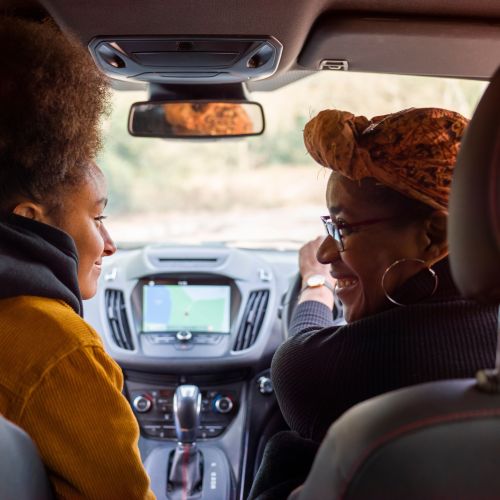
Think passing your driving test gets easier with age? The data suggests otherwise. Here's why younger learners tend to pass more often, and why it's never too late to get your licence.
Key takeaways
17-year-olds have the highest driving test pass rate at around 61%.
Older learners often perform better on retakes, with age becoming less important after multiple attempts.
Both young and older drivers can face higher insurance costs, but telematics policies may help reduce premiums.
For decades, learning to drive was seen as a rite of passage at 17. Today, that's changing. Some people delay learning because they live in cities with good public transport. Others are put off by the cost of lessons, long waiting times for tests, or simply a lack of confidence. Many only decide to learn when work, family commitments or lifestyle changes make driving more important.
But does age affect your chances of passing? Recent driving test data suggests it does. While the national practical driving test pass rate sits at around 49%, younger learners consistently achieve the strongest results.
Why do younger learners pass more often?
The highest pass rates are seen among 17-year-olds, who pass at around 61%. By comparison, pass rates fall to roughly 45% among learners aged 25 to 34 and around 36% for those aged 45 and over. While that may sound surprising, there are several reasons why younger learners often have an advantage.
More frequent lessons
Many teenagers are able to fit driving lessons around school or college schedules and can often take lessons several times a week. This means skills are learned and reinforced quickly. Mum and dad may also be helping out with the costs. Older learners frequently have to balance lessons with work, childcare and other responsibilities. Taking a lesson every week or two can make progress slower and increase the chances of forgetting techniques learned earlier in the process.
Learning new skills
Driving requires coordination, quick decision-making and strong spatial awareness. These skills can be learned at any age, but younger people often acquire new motor skills more quickly due to the simple fact their brain is in a more intensive learning phase of life.
Developing habits
Teenagers usually start with a clean slate. By contrast, older learners may have years of experience as passengers or cyclists.
Test pressure
For many adult learners, passing feels more important. They may need a licence for work, school runs or caring responsibilities. That extra pressure can increase nerves during the test itself, leading to avoidable mistakes.
Practice matters more than age
Age may influence first-time pass rates, but practice remains one of the biggest factors in driving success. DVSA guidance suggests learners typically need around 45 hours of professional instruction, alongside approximately 22 hours of private practice, before reaching test standard.
The amount of practice can vary significantly between individuals, but learners who combine professional lessons with supervised driving experience often build confidence more quickly and become familiar with a wider range of road conditions. And realistically, consistent practice usually matters more than the date on your birth certificate.
Don't be discouraged by a failed test
Failing a driving test can be disappointing, but it's extremely common. With the overall pass rate sitting below 50%, many successful drivers do not pass first time.
In fact, the difference between younger and older learners becomes much smaller after a second or third attempt. Once learners have experienced the test environment and addressed the faults highlighted by the examiner, age becomes far less important in predicting success. Many learners pass shortly after receiving targeted feedback and spending a little extra time working on weaker areas.
The practical test isn't the only challenge. The UK theory test pass rate has fallen significantly over the past two decades, dropping from around 65% in 2007/08 to approximately 45% in 2024/25. This highlights the importance of preparing thoroughly for both the multiple-choice questions and hazard perception sections, regardless of your age or driving experience.
What about insurance?
Passing the test is only part of the journey. Both younger and older drivers can face higher insurance premiums.
Insurers calculate prices using claims data, and statistically both newly qualified drivers and some older age groups may be considered higher-risk than experienced middle-aged motorists. One option worth considering is a telematics, or "black box", policy. These policies monitor driving behaviour and can reward safe driving with lower premiums.
It's also important to estimate your annual mileage accurately. Whether you're a young driver commuting part-time or a retiree making occasional trips, ensuring your mileage reflects your actual driving habits could help you avoid paying more than necessary. Although younger learners enjoy the highest first-time pass rates, age should never be a barrier to getting behind the wheel. Whether you're helping a teenager learn, finally taking the plunge yourself, or returning to driving later in life, preparation and regular practice remain the biggest keys to success.
And your local Howden team is here to help: simply contact your local branch to learn more about what kind of car insurance policy could suit you.
Sources: DVSA, Zego
Related Products
Being a landlord involves a lot of responsibility, leaving little room for error. A landlord insurance policy can act as a safety net if anything were to go wrong.
We understand that there’s no one-size-fits-all policy when it comes to let property insurance.
Whether you’re a property owner, developer, or investor, we can help you find real estate insurance that can be specifically tailored to your exact needs.
Get the right rent guarantee insurance cover to protect your income and property portfolio if tenants fail to pay rent.