

11 November 2026
Sir John Soane’s Museum: a home built around curiosity
3 minutes
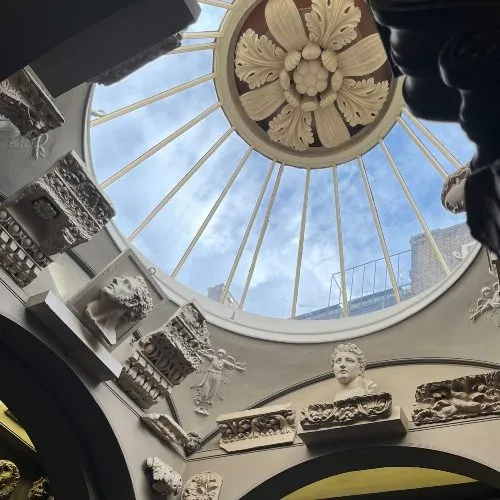
Understanding the worlds our clients are passionate about is an important part of the way we work at Howden. Through specialist training, events and visits, our teams have opportunities to deepen their knowledge of areas such as art, antiques and collecting, helping them better understand the objects our clients value and the stories behind them.
As part of this ongoing learning, Sarah Oakley from our Private Client Risk Management team recently visited Sir John Soane’s Museum in London. Here, she shares some of the history and details that stood out to her.
A home built around a collection
What happens when an architect’s home becomes his greatest collection, and the collection becomes part of the architecture itself?
At Sir John Soane’s Museum in London, the building and its contents tell a shared story. Paintings, sculpture, architectural fragments and models are brought together in spaces designed not simply to display them, but to inspire fresh ways of seeing.
It is more than a collection of remarkable objects. It is the lasting expression of an architect’s curiosity, imagination and commitment to learning.
From architectural ambition to a lifelong passion
Born in 1753, the fourth son of a bricklayer, Soane’s talent for drawing helped open the door to his architectural training. His father’s professional connections provided an opportunity, but his own ability and dedication, sprinkled with a bit a luck, helped him make the most of it.
Winning the Royal Academy’s Gold Medal for Architecture led to a bursary funded by King George III, enabling Soane to undertake a Grand Tour of Europe. His encounters with the ancient sites of Rome and Pompeii sparked a lifelong fascination with Classical art and architecture. This influence is clearly reflected in his home, not only in his collections but particularly in the rich Pompeii red walls of the Library-Dining Room, a colour inspired by the walls of the ruins at Pompeii.
|
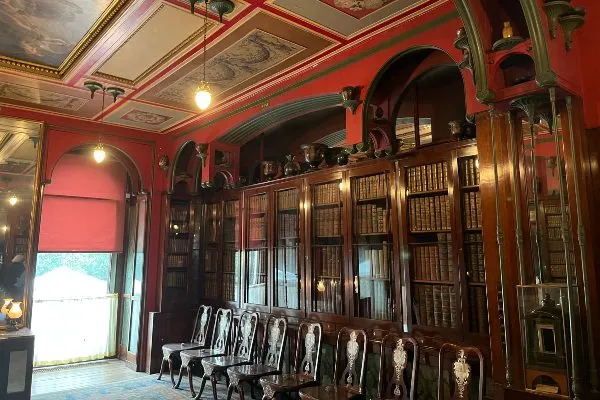
Soane went on to become one of the foremost architects of the Regency era. His inventive approach to light, space and Classical forms distinguished a career that included 45 years as architect to the Bank of England and the design of Dulwich Picture Gallery.
Three buildings, one extraordinary vision
The Museum occupies Nos 12, 13 and 14 Lincoln’s Inn Fields, each acquired and rebuilt by Soane.
He purchased No. 12 in 1792, replacing the existing house with a home and architectural office. Its location placed him conveniently close to the Bank of England and the Royal Academy.
After becoming Professor of Architecture at the Royal Academy in 1806, Soane acquired No. 13 the following year. This gave him more space for his practice and his growing collection, including the area now known as the Dome Area. This was one of Soane’s favourite rooms. More than 100 mirrors helped keep the space bright, while the dome amplified voices, making it an effective setting for entertaining potential clients.
The acquisition of No. 14 in 1823 enabled further expansion. Its rebuilding in 1824–25 included a new Picture Room extending No. 13, providing space for his increasing collection of paintings.
Together, these buildings became a place where domestic life, architectural practice, collecting and education overlapped.
A collection designed to spark connections
By the time of Soane’s death, his home contained thousands of objects, from Ancient Egyptian antiquities and Roman sculpture to books, drawings, furniture and architectural models. Among its most celebrated acquisitions was the sarcophagus of the Egyptian pharaoh Seti I. Initially offered to the British Museum, it was purchased by Soane in 1824 for £2,000 after the Museum declined to meet the asking price.
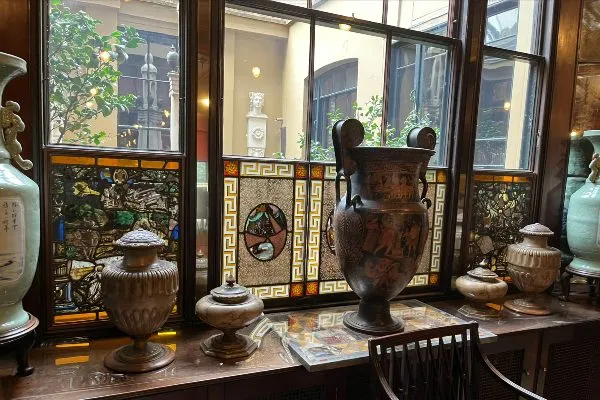
At first glance, the interiors might seem densely packed. But their arrangement was deliberate. The layered approach feels remarkably relevant today, with maximalist interiors once again celebrating the art of bringing together antiques, artwork and objects collected over time.
|
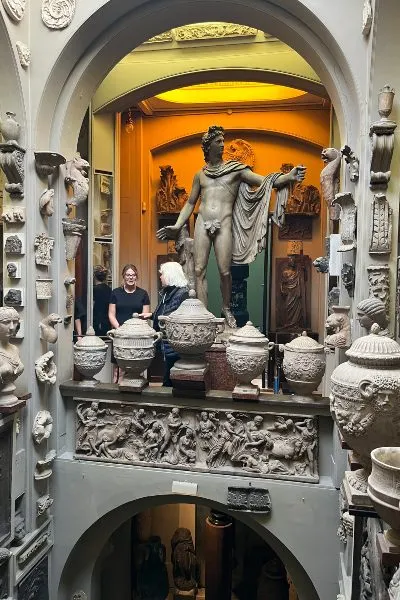
Soane continually reconsidered the relationships between objects, using their placement to create visual connections and encourage reflection. In the Model Room, for example, models of his own buildings were positioned beneath models of the ancient ruins that had inspired them.
The rooms were not simply containers for the collection. They were part of its meaning. That is what makes the Museum so distinctive: the significance lies not only in individual objects, but also in the conversations between them and in the architecture surrounding them.
|
Preserving a vision for future generations
Soane wanted his collection to continue inspiring others beyond his lifetime.
In 1833, he secured a private Act of Parliament to preserve his house and collection for public benefit. Following his death in January 1837, responsibility passed to a Board of Trustees charged with carrying out his wishes. The Act established a lasting foundation for the preservation of the Museum, its library and its works of art.
His legacy offers a compelling reminder that collecting can be about much more than ownership. It can be a way of sharing knowledge, connecting ideas and making inspiration accessible to others.
At Sir John Soane’s Museum, the house is not merely the setting for the collection. It is one of its most remarkable exhibits.
Protecting the collections that matter to us
For anyone who collects art, antiques or other valuable objects, understanding what makes a collection distinctive is also an important part of protecting it. Value is not always simply financial. Provenance, rarity, condition and the relationship between individual pieces can all contribute to a collection’s significance. As collections develop and values change, professional valuations can help ensure insurance arrangements continue to reflect what you own.
At Howden, our Private Client team works with clients to understand their collections and wider circumstances, from ensuring values remain up to date to understanding how policy limits can apply to art, antiques and other valuable possessions.
To speak to us about your collection, call 020 8256 4901 or email privateclients@howdeninsurance.co.uk
Related Products
From jewellery, antiques, netsuke, art and zithers - collectibles insurance to protect your treasure.
A story to tell: mourning jewellery - history lovers keep the market buoyant
The art of maximalism
What are inner limits on a home insurance policy?