

14 October 2026
The art of maximalism
9 minutes
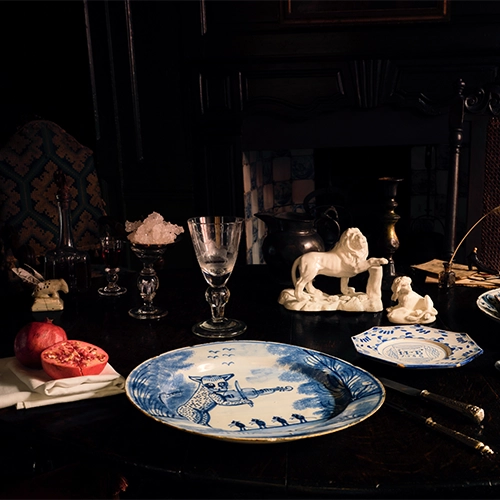
Twenty years on from IKEA’s ‘Chuck out your Chintz’ campaign, maximalism is back in all its glory and Michael Lake, Bonhams Head of Department, European Sculpture and Works of Art discusses the trend.
Hello maximalism, goodbye minimalism. After a couple of decades where home interiors were stripped back to bare walls and zero clutter, the maximalist approach is back, embracing curated selections of antiques and artwork. I asked Michael Lake, Bonhams Head of Department, European Sculpture and Works of Art to explain this major shift in interior design.
The examples below illustrate trends observed through Bonhams' auctions and should not be taken as an indication of future market performance.
Michael, what is your interpretation of maximalism?
My interpretation come, perhaps selfishly, from my own love of antique objects and artworks where curated pieces of all types and ages are grouped together in a form of lovingly ordered chaos covering every available vertical and horizontal surface.
Is there a design philosophy?
For me, the term ‘maximalism’ more strictly stems from the off-the-cuff witty retort ‘Less is Bore’ made by the American architect and theorist Robert Venturi in 1963 as a retort to designer Mies van der Rohe’s famous mantra ‘Less is More’ which he used to describe his rigidly pared-back minimalist vision.
However, the term ‘maximalism’ has in more recent years been more widely embraced by many in fashion and interior design circles as a positive reaction to the predilection for minimalism which dominated the late 1990s through to the early 2010s.
This filtered into the rarified world of antiques and art, which had, up until the early 1990s been cossetted from those campaigning for white walls and an absence of ornament and pattern most famously vocally democratised by the 1996 IKEA campaign ‘Chuck out your Chintz’.
How has the trend evolved?
This trend has really gathered momentum in the last 10 years. To some like me, the desire to be surrounded by the beautiful or sometimes just quirky, charming, amusing or even just bad taste has never gone away. And to demonstrate this, I always like to use a quote from the eternally stylish fashion editor Diana Vreeland who once quipped ‘We all need a splash of bad taste… no taste is what I'm against’.
After years of being unfairly seen as fusty and something for older generations, the traditional furniture market has particularly seen leaps and bounds in the past few years with an influx of younger buyers.
Millennial and Gen Z collectors
What has been refreshing is to witness the emerging millennial and Gen Z collectors who are swapping mass-produced home decoration for the thrill of ‘antiquing’ (a term I like to use for the hunting out of period treasures) and more modest vintage finds to create their own truly individual and often thriftly sourced sustainable interiors.
I like to think some of these individuals will become, as income allows, the more serious collectors of the future and they will come to Bonhams to buy, be it a fine piece of furniture, a bronze or marble sculpture, fine porcelain or glassware, gleaming antique silver or a wonderful old master picture and we will see the full-circle return to the type of antique collecting which I aspired to when I was younger.
Which designers have influenced maximalism?
There are so many designers and dealers who have specialised in the maximalist look over the years, often with wide fluctuations in their personal taste.
The seeds of maximalism were sown in the US with the Grand Lady Decorators, the most memorable being Rose Cumming (1887-1968) who was particularly noted for her flamboyant, eclectic and colourful interiors often incorporating antique furnishings of all types.
Similarly, in France, Madeleine Castaing (1894–1992) was a legendary French interior designer and antiques dealer who operated from her iconic boutique in Paris, revolutionising 20th-century design by blending periods, bold animal prints and vibrant colours.
How has maximalism impacted the auction market?
Full, stylishly opulent and vibrantly coloured interiors are back in style. This maximalist approach embraces a curated selection of antiques and artwork from across the globe, spanning from antiquity thorough to the works of celebrated 20th-century decorators.
Today, this aesthetic is driven as much by traditional decor magazines as it is by the online influencers shaping modern tastes. At Bonhams in London, we present many of our traditional fine and decorative arts auctions as part of our marquee Spring/Summer and Winter auction weeks. During Classic Week, we welcome collectors and visitors to our New Bond Street galleries to explore a maximalist display of ceramics, glass, works of art, furniture, sculpture, clocks, Old Master paintings, books and manuscripts, antiquities and more.
|
|
|
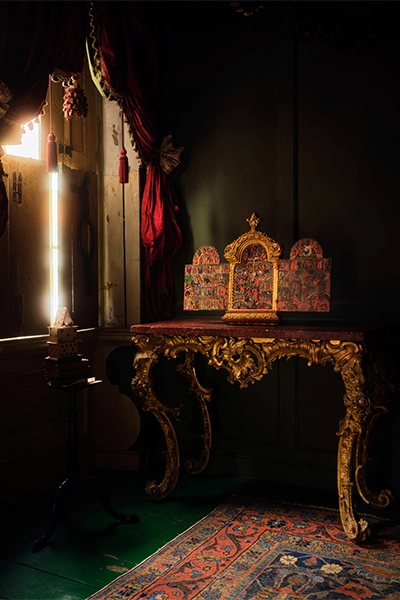
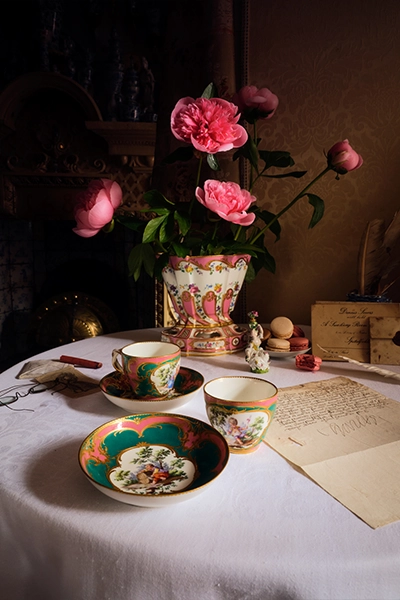
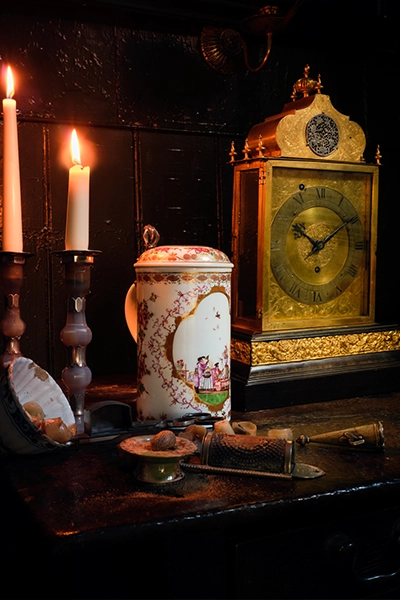
(Image: Auction items on display at Dennis Severs House in Spitalfields, London, during Bonhams’ Classics Week
Experiencing the galleries filled with exceptional works across the many collecting categories is always remarkable. This rich and eclectic presentation is a perfect expression of maximalism, bringing together extraordinary objects from different periods, cultures, and disciplines under one roof.
What's hot in the market?
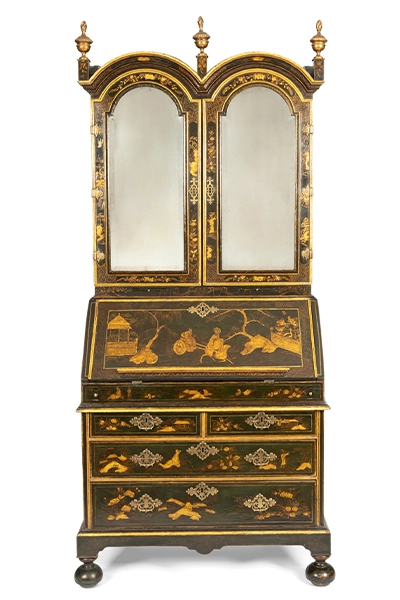
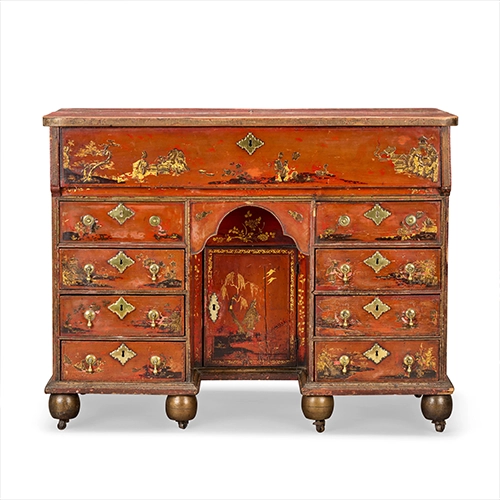
European japanned furniture, particularly coloured japanned pieces in the Chinoiserie taste, has done particularly well and we have sold some wonderful examples including a fine George I green japanned bureau cabinet in the manner of John Belchier that achieved £69,600 in 2022, and a George I scarlet japanned kneehole desk achieved £20,000 this year (2026). Similarly, Chinese export lacquer, which European japanned pieces mimic, is also of great interest to those furnishing maximalist interiors, particularly screens from the 18th and 19th centuries.
(Image: A fine and rare George I dark green and gilt japanned bureau-cabinet in the manner of John Belchier (1699-1753) |
(Image: An impressive George I scarlet japanned secretaire kneehole desk of large proportions circa 1720, the external japanned surfaces require professional restoration and extensive revivification) |
Old Master paintings are a key addition to the maximalist interior. The market for early Elizabethan and Jacobean portraits is particularly strong, with bidders competing fiercely for top quality works in good condition. A striking example of this was a George Gower’s portrait of Sir Edward Monins of Waldershare depicting a newly knighted aristocrat and associate of Queen Elizabeth I, dressed in a striped black and gold doublet with plumed cap. The painting was a masterclass in Elizabethan iconography and symbolism. Painted in 1575, the richly detailed work was a rare example of Gower's early career and a powerful symbol of status, allegiance and royal favour at the height of Elizabeth I's reign. The portrait achieved £1,113,200 against a pre-sale estimate of £200,000-£300,000. Early works by Dutch and Flemish masters are also keenly sought after at auction today.
(Image: George Gower (circa 1540-1596 London) Portrait of Sir Edward Monins of Waldershare, three-quarter-length, in a black and gold striped doublet and plumed cap) |

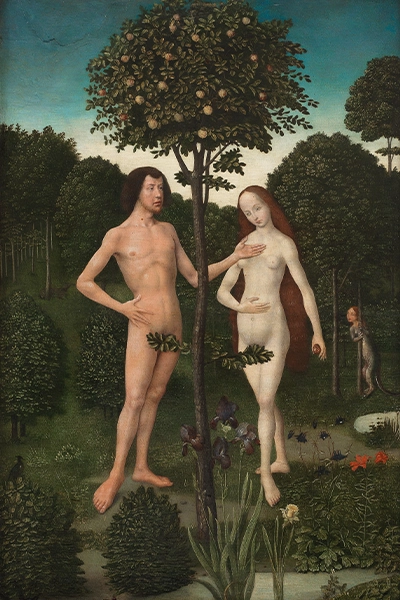
A dramatic result was achieved at Bonhams in 2022 when we offered an early oil painting depicting Adam and Eve in the Garden of Eden, by the Master of the Embroidered Foliage (active in Brussels and Bruges 1480-1510). With a pre-sale estimate of £25,000-£30,000, fierce competition in the auction room delivered a result of £806,700.
Old Master still life paintings that depict elaborate arrangements of flowers and fruit, trompe l'œil compositions and endearing depictions of domestic pets also lend themselves beautifully to a maximalist interior.
(Image: Master of the Embroidered Foliage (active in Brussels and Bruges 1480-1510) Adam and Eve in the Garden of Eden) |
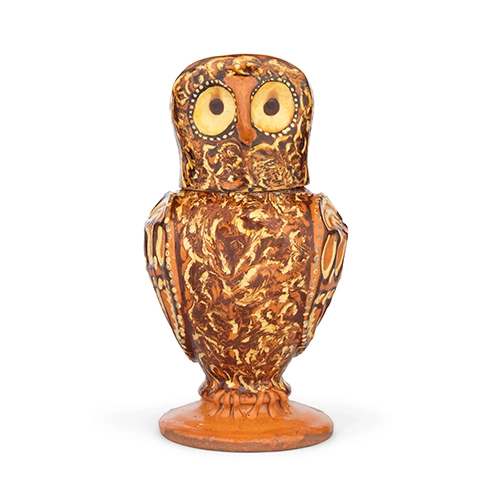
Ceramics are also being avidly collected. Bonhams is one of the few international auction houses to continue holding dedicated specialist sales for both English and European ceramics. Recent highlights include a remarkable Staffordshire slipware owl jug and cover, circa 1690–1710, which sold this year (2026) for £70,250. Modelled in the form of an owl, the jug's whimsical design, combined with its exceptional rarity, generated strong bidding.
(Image: A remarkable Staffordshire slipware owl jug and cover, circa 1690-1710) |
(Image: A pair of pink-ground Sèvres flower vases and stands (vases hollandois), circa 1758) |
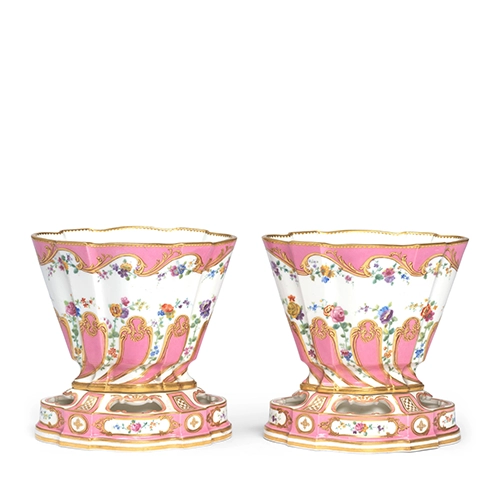
Sèvres porcelain has long been regarded as one of the ultimate expressions of maximalism in the decorative arts, celebrated for its extraordinary craftsmanship, intricate decoration and association with royal luxury and power. The manufactory flourished in the 18th century under the patronage of King Louis XV and his influential mistress, Madame de Pompadour.
A pair of pink-ground Sèvres flower vases and stands, circa 1758, recently sold for £63,900. They also boasted exceptional provenance, having once formed part of the Rothschild family collection, whose rich interiors are celebrated as among the finest 19th-century examples of aristocratic maximalist collecting and display.
Where are you seeing a particular hunger in the market?
Period mirrors, particularly fine Georgian gilt mirrors, and gilt-bronze and cut-glass chandeliers, especially Regency tent-and-waterfall examples, are increasingly popular with our buyers, even among those who have no intention of furnishing an entire room with period furniture.
Similarly, 16th to early 18th century French and Flemish tapestries remain wonderfully decorative. Provided space permits, or where they are offered as fragments, which are often easier to display and can therefore achieve higher prices, they represent exceptional value for money. Originally prohibitively expensive to produce, these tapestries were once among the most highly prized possessions in aristocratic households, as reflected by the prominence they were given in contemporary wills and inventories.
What are clients buying that perhaps they weren't a few years back?
In the decorative market, I have noticed a shift in client preferences. Buyers are increasingly drawn to curated, 'instant' collections sold as a single lot. While they desire the layered look of an interior lovingly assembled over decades, they simply lack the time to acquire pieces over such an elongated period.
A prime example of this trend occurred in our 2024 Connoisseurs’ Library sale, where two hugely appealing lots of Victorian copper castle and novelty jelly moulds, perfect to display on the shelves of a dresser in a country house, achieved £11,520 and £6,144.
(Image: A rare 19th century Benham and Froud recumbent lion copper jelly mould together with a good collection of 24 similar period Benham and Froud copper jelly and confectionery moulds of elaborate circular and oval castle and ring form) |

Who are the designers to follow?
Instagram is an endless source of design inspiration. For a daily dose of maximalism, these are some of the accounts I most recommend:
British designer Luke Edward Hall captures the zeitgeist of the modern maximalist movement. He is the darling of those who embrace his eclectic style, carefully mixing serious antiques with quirky modest finds and whimsical modern pieces.
His signature interiors utilise clashing stylish patterns and colour pushing back against years of mid-century minimalism. Instagram: @lukeedwardhall
Alidad is known for his opulent yet supremely comfortable interiors, which are always richly textured, invariably combining a mix of antique, vintage and modern designs, in various colours, patterns, textures and scales. A key element of the maximalist spaces he creates is the inclusion of textiles, rugs and tapestries. Instagram: @alidad_ltd
The mother-daughter duo Katherine Riddell and Ella Jerman-Riddell, document their explorations of Britain’s great country houses through their Instagram diary @intheenglishstyle. Expect regular posts featuring country house interiors, decorative arts and old masters, the perfect wander through the maximalist aesthetic.
Bonhams’ interiors account is @interiorsatbonhams where posts feature treasures coming to auction across the breadth of Classics and Collections sales at Bonhams.
Another account is @charlieflthomas, Charlie Thomas, Bonhams’ Head of House Sales and Private and Iconic collections. He has been responsible for bringing many exciting maximalist interiors to auction over the years, including most recently the contents of Monreith House, Scotland and Kerfield House, Cheshire.
Another source of inspiration is both Cabana Magazine and World of Interiors, whose Instagram accounts are something of a temple to this design philosophy @cabanamagazine and @theworldofinteriors
How do buyers navigate maximalism?
The maxim of only buying what you like is the best one to take. In terms of style inspiration, I would advise looking at designers from the past and today who embrace the ethos and visiting auction houses, antique dealers, museums and galleries to hone in what appeals to you.
Prospective buyers can register their interest with Bonhams to receive alerts whenever a particular type of object is coming up for auction. They are also welcome to view most of our live and online sales in person at our New Bond Street or Knightsbridge salerooms in London, or at our Edinburgh office, where our specialists are on hand to offer advice and answer questions.
Once registered for a sale, buyers who have opted to receive further communications from Bonhams can be kept informed about forthcoming auctions and notified of lots that align with their collecting interests, regardless of whether they were successful in previous sales.
How does Bonhams guide buyers seeking exceptionally rare items?
We pride ourselves on being one of the most approachable international auction houses and cultivating strong relationships with buyers is at the heart of what we do. Auction house specialists are always enthusiastic to share their knowledge with collectors or anyone interested in exploring the auction process.
Wherever possible, try to view the items you are thinking of bidding on in person. We hold pre-sale auction viewings in the days before most of our auctions, our Classics Week viewings are always an event in themselves.
Last year, we collaborated with the artist and botanical designer Rollo Skinner, whose extraordinary floral installations brought our auction highlights vividly to life and in July 2026 we partnered with the Dennis Severs House, one of London's most evocative historic houses.
During the views, our specialists are always on hand and offer you an opportunity to handle and examine pieces up close. Requesting a condition report and discussing it with our specialists is a great way to understand the pieces of history you are buying.
Visit bonhams.com
How should collectors insure a maximalist interior
Creating a maximalist interior often means assembling a carefully curated collection of antiques, artwork, ceramics, furniture and decorative objects over many years. While each piece may have been chosen for its beauty, history or personal significance, collectors should ensure those items are accurately reflected within their insurance arrangements.
Many high-value possessions can appreciate over time, while specialist items such as fine art, antiques and collectibles may require regular valuations to ensure cover remains appropriate. It's also important to understand whether individual items are subject to policy limits.
For collectors whose homes feature significant collections, specialist insurance can provide broader protection for valuable possessions, alongside access to expert claims support should the unexpected happen.
At Howden, we work with clients to understand their collections and arrange insurance that reflects the true value of the items they own. We can also help facilitate professional valuations and provide guidance as collections evolve. After all, a carefully curated collection can take years to build, and having the right protection in place helps ensure it can be enjoyed for generations to come.
Related Products
Key to our success is our exemplary service, made possible by a team of people who have the character and skill to manage, meet, and exceed the expectations of our clients.
Valuations: what insurers expect
Silver Steps Out of Gold’s Shadow