
30 July 2026
Lab-grown diamonds and the changing jewellery market
4 minutes
Diamonds have long been prized for their beauty, emotional significance and perceived rarity. But the market is changing.
The growth of lab-grown diamonds, shifting consumer preferences, pressure on natural diamond prices and recent production pauses by major mining companies are all reshaping how diamonds are bought, valued and insured. For jewellery owners, this creates a more complex picture. Different parts of the diamond market are moving in different directions, meaning values can change significantly over time. That makes professional, up-to-date jewellery valuations more important than ever.
What are lab-grown diamonds?
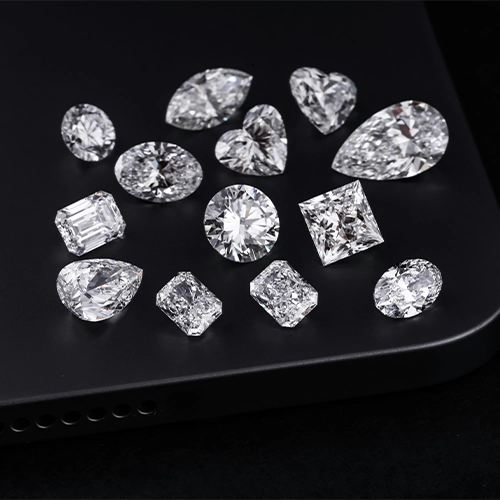
Lab-grown diamonds are diamonds created in a controlled laboratory environment rather than mined from the earth. They have the same chemical and physical properties as natural diamonds and can be indistinguishable to the naked eye. In many cases, even experienced jewellers need specialist testing equipment to identify whether a diamond is natural or lab-grown.
While lab-grown diamonds look and behave like natural diamonds, they are created in a laboratory rather than formed naturally over millions of years. As a result, they are typically available at a lower price and may hold their value differently over time.
Why are lab-grown diamonds changing the market?
Lab-grown diamonds have expanded consumer choice and made larger stones more accessible. As production has increased, prices have fallen, creating a clear price difference between lab-grown and natural diamonds.
Industry reporting has highlighted how lab-grown diamonds are changing the economics of the global diamond trade, with production growth, lower prices and wider consumer acceptance putting pressure on parts of the natural diamond market. A 2026 report cited by Rapaport also noted that lab-grown diamonds accounted for 42% of all diamond jewellery sold in 2025, including 48% of engagement rings, based on BriteCo data1,2.
For some buyers, the appeal is clear: a larger or higher-quality stone at a lower price. For others, concerns around mining practices, provenance and environmental impact have also influenced purchasing decisions.
The changing definition of value
The growth of lab-grown diamonds is changing how value is understood. It is no longer enough to look at carat, cut, colour and clarity alone. Origin, provenance, craftsmanship, brand, period, condition and rarity all matter.
A lab-grown diamond may offer visual impact and affordability, but it does not necessarily behave in the same way as a natural diamond from a valuation or resale perspective. Equally, not every natural diamond will hold or increase its value simply because it is mined.
The market is becoming more segmented. Lab-grown diamonds are increasingly positioned as an accessible choice, while the strongest natural diamond values are likely to sit with stones and pieces that have particular rarity, quality, provenance or designer significance.
This is especially relevant for jewellery from houses such as Cartier, Tiffany & Co. and Van Cleef & Arpels, where the value of a piece may reflect not only the stones themselves, but also the maker, design, craftsmanship and demand among collectors.
What does this mean for natural diamonds?
While the rise of lab-grown diamonds has placed pressure on parts of the natural diamond market, the outlook is not the same for every stone.
Some mining companies have scaled back production in response to weaker demand. In July 2026, De Beers announced plans to pause production at its Venetia mine in South Africa for two years, highlighting the challenges facing parts of the natural diamond sector3.
At the same time, a reduction in the supply of natural diamonds could increase demand for particularly rare, high-quality stones. As a result, while some diamonds may be worth less than they were a few years ago, others could retain or increase their value.
This creates a more complex market for jewellery owners. Rather than moving uniformly, different segments of the market are behaving in different ways, making professional, up-to-date valuations more important than ever.
As Rachel Doerr of Doerr Dallas Valuations comments that:
“Rapid changes in the diamond market make up to date appraisals essential and we recommend this is done every 12-18 months. While lab-grown diamonds have expanded consumer choices, fine natural diamonds, especially those from designers such as Cartier, Tiffany & Co., and Van Cleef & Arpels, continue to appreciate. Additionally, recent mine closures are sure to make large, high-quality natural diamonds rarer.”
Why jewellery owners should pay attention
For jewellery owners, the key issue is not whether lab-grown diamonds are “better” or “worse” than natural diamonds. It is whether the value recorded for insurance purposes still reflects the current market.
As the diamond market evolves, values are not moving in a single direction. While some rare natural diamonds and designer pieces may continue to attract strong demand, values in other parts of the market may have softened. This means historic valuations may no longer accurately reflect current replacement costs.
While much of the discussion around valuations focuses on underinsurance, overinsurance can be equally important. If a piece no longer warrants its previous valuation, owners may be paying higher premiums than necessary for a level of cover that is no longer required. An accurate valuation isn't always about increasing cover – sometimes it's about ensuring you're not paying for cover you no longer need.
This can be particularly important for inherited jewellery, family collections and pieces that have not been professionally reviewed for some time. These items may include a mix of natural diamonds, coloured stones, antique jewellery, designer pieces and pieces where the original purchase documentation is no longer available.
The importance of up-to-date valuations
In a fast-moving market, regular valuations help ensure that jewellery is insured on the right basis. They provide a more accurate view of current replacement values, while also identifying where a piece may require specialist treatment due to its age, provenance, maker or rarity.
A professional valuation can also help distinguish between natural and lab-grown diamonds, which is increasingly important as both are now present in the market. As Rachel Doerr explains:
“Having your jewellery valued by Doerr Dallas Valuations ensures your pieces are assessed accurately by experts who stay aligned with current market shifts. Our specialists are professionally equipped to test and differentiate natural diamonds from lab-grown alternatives, delivering reliable and up-to-date valuations.”
For high-value jewellery owners, this level of expertise can be essential. An accurate valuation is not simply an administrative exercise; it is a key part of ensuring that insurance cover remains correct and that any future claim can be handled as smoothly as possible.
Looking ahead
The diamond market is likely to continue evolving. Lab-grown diamonds have become an established part of the jewellery landscape, and natural diamonds are likely to be viewed increasingly through the lens of rarity, provenance and long-term desirability.
Nobody can predict exactly how values will move. But what is clear is that jewellery owners should not assume that historic valuations remain accurate indefinitely. Whether values have risen, fallen or become more nuanced, regular reviews can help ensure that cover keeps pace with the market.
In a period of change, the most important step is to understand what you own, how it is valued and whether your insurance still reflects its current replacement cost.
How Howden can help
We understand that jewellery is often both financially and personally significant. Ensuring it is properly valued is an important part of protecting it.
We work with experienced specialist valuers and can arrange an introduction where a professional, up-to-date jewellery valuation is required. This can help identify whether existing insurance values remain appropriate and whether any changes are needed to ensure your cover continues to reflect your needs.
To speak to us about your insurance, call 020 8256 4901 or email privateclients@howdeninsurance.co.uk
Sources

Steve Moores
Steve has built up a wealth of expertise and insight in private client insurance, having worked in insurance for more than 20 years. As the lead for our Risk Management proposition, he helps clients reduce the likelihood of a claim and ensures that, if a claim does occur, their policy responds exactly as expected.
Steve Moores
Steve has built up a wealth of expertise and insight in private client insurance, having worked in insurance for more than 20 years. As the lead for our Risk Management proposition, he helps clients reduce the likelihood of a claim and ensures that, if a claim does occur, their policy responds exactly as expected.
Related Products
Key to our success is our exemplary service, made possible by a team of people who have the character and skill to manage, meet, and exceed the expectations of our clients.
Given that jewellery can be very expensive, we know how important it is that it’s protected properly with the right insurance.
Valuations: what insurers expect
How to protect jewellery and watches: from home safes to bank vaults