

27 October 2026
Protecting your thatched home: key insurance conditions to review this winter
4 minutes
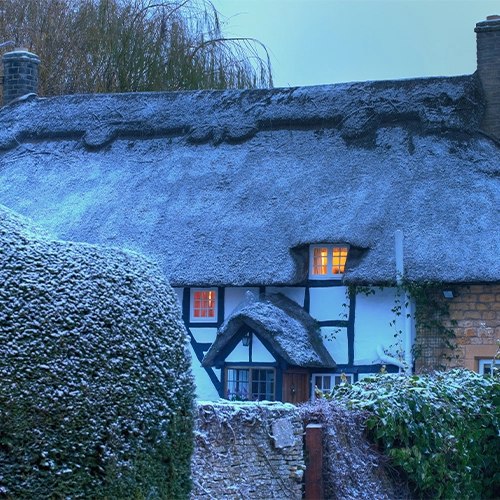
There is something special about owning a thatched home. Whether it's the character, craftsmanship or connection to the property's history, these homes are among the most distinctive in the UK. However, they also come with responsibilities that differ from those of a more conventional property.
Because of their unique construction, thatched homes often require a more specialised insurance approach, with policy conditions designed to help reduce the risk of fire, weather damage and other costly incidents. These conditions should never be treated as "small print". Failure to comply with them could affect your ability to make a successful claim when you need your insurance most.
As we move into the colder months and fireplaces and wood burners come back into regular use, now is a good opportunity to revisit your policy requirements and check that everything remains up to date.
Chimneys, stoves and open fires
Thatch house fires can originate from chimneys, flues, wood burners and open fireplaces, making regular maintenance of these essential.
Many insurers require you to notify them if a stove, wood burner or open fire that has been unused or dormant is put back into service. Insurers’ requirements vary, but where open fires are present, chimneys are often required to be:
Kept in a good state of repair
Professionally swept along their full length at least once a year before winter use
Where stoves or wood burners are installed, the chimneys are often required to be:
Kept in a good state of repair
Professionally lined and insulated
Swept professionally at least twice annually, usually before and during the colder season
Inspected by an engineer every three years, with evidence available if requested. Required certification varies between insurers, with some insurers insisting on a CCTV chimney inspection.
If your property has a spark arrester fitted, it should be cleaned whenever the chimney is swept to ensure it remains effective. However, it is worth noting that some insurers will not cover homes with spark arrestors.
A growing area of focus: wood burners
In recent years many households have installed a wood burning stove as a supplementary heat source due to rising energy costs. However, increased usage can accelerate the build-up of soot and creosote within flues, increasing fire risk.
Homeowners should ensure that stoves are operated in accordance with the manufacturer's guidance and only burn suitable fuels to minimise deposits within the chimney system.
While wood burners are often seen as an attractive feature, they can present additional fire risks in thatched properties and may affect both insurance availability and premiums. For this reason, we would generally advise homeowners to think carefully before installing one.
Bonfires and garden burning
Autumn and winter often see an increase in bonfires, particularly around Bonfire Night and during seasonal garden clearances.
Many insurers include specific conditions regarding the burning of garden waste or use of incinerators. A common requirement is that no bonfire or incinerator under your control is lit within 100 metres of the property.
Before lighting a bonfire, check your policy wording carefully and ensure local conditions, such as dry weather or high winds, do not increase the risk of sparks travelling towards the roof.
Maintaining your thatch
The condition of the thatch itself plays an important role in both risk management and insurance cover.
Many insurers require the roof to be inspected periodically by a qualified master thatcher, often at least once every ten years. Any recommendations arising from the inspection should be addressed within a reasonable timescale.
Regular maintenance is not only important for preserving the appearance and lifespan of your home, but also for meeting your insurer's expectations. Where maintenance is neglected, insurers may apply restrictions or exclusions relating to:
Storm damage
Water ingress
Weight of snow
Or in extreme circumstances, policy cancellation.
Regular inspections can help identify minor issues before they develop into costly repairs.
Extreme weather and climate resilience
Recent years have seen increasingly frequent extreme weather events across the UK, including hotter summers, unpredictable storms, flooding and periods of prolonged rainfall.
For owners of thatched properties, preventative maintenance has never been more important. Regular checks of ridge condition, roof fixings, drainage systems and surrounding trees can help reduce the risk of weather-related damage.
Insurers are also paying closer attention to flood exposure, particularly in areas that have experienced repeated flood events. This may result in higher excesses, additional conditions, or recommendations to implement resistance and resilience measures.
Fire Detection and Prevention
Most thatched home insurers require robust fire protection measures. Common requirements include:
Fire extinguishers
Insurers often specify the type, and location of extinguishers. Some insurers require these to be professionally serviced and maintained in accordance with the manufacturer's recommendations.
Smoke and heat detection
The required standard of fire depends on the property's size, construction and insurer. Most insurers, however, require one smoke detector in the attic space, and at least one on each floor, plus a heat detector in the kitchen.
While some properties may only require standalone alarms, many insurers increasingly favour interlinked fire detection systems which provide earlier warning throughout the home. These may be wired or wireless. The advantage of these is that when one sounds, they all do. If your home is particularly large, insurers may require that the alarm is connected to an alarm receiving centre.
Electrical Inspections - EICRs
Electrical faults remain a significant cause of domestic fires.
Many insurers now require an Electrical Installation Condition Report (EICR) every five years, or sooner if recommended by the inspecting electrician. If remedial works are identified, they should be completed promptly and evidence retained.
Policy endorsements and additional requirements
No two thatched home insurance policies are exactly the same.
Many insurers apply specific endorsements to individual properties, which may either introduce additional conditions or amend the standard policy wording.
Examples include:
Time-limited requirements, such as obtaining an updated EICR within 30 days
Installation of additional smoke or heat detection equipment
Higher flood excesses
Restrictions on certain types of cover
Requirements for building surveys or thatch maintenance inspections
These endorsements are usually shown towards the end of your policy schedule and should be reviewed carefully.
Documentation matters
Good record keeping may not be the most exciting part of owning a thatched property, but it can prove invaluable should you ever need to make a claim.
Consider retaining copies of:
Chimney sweeping certificates
Chimney and stove inspection reports
EICRs and electrical certificates
Thatch inspection reports
Fire alarm servicing records
Evidence of completed maintenance works
If an insurer asks you to demonstrate compliance with policy conditions, having these documents readily available can help avoid delays and disputes. Many insurers ask for sight of these to speed up any subsequent claim.
Next steps
A thatched home is often far more than just a property. For many owners, it represents a way of life, a connection to heritage and a home with genuine character. Taking the time to understand your insurance requirements, keep up with maintenance and retain key documentation can help protect that investment for years to come.
If you're unsure about any aspect of your cover, we'd be happy to help. A review of your policy conditions today could help avoid complications if you ever need to make a claim in the future.
Call on 020 7543 2801 or email privateclients@howdeninsurance.co.uk
Related Products
El Niño 2026–27: Is your home ready for a wetter, stormier season?
Is the ABI rebuild cost calculator right for your home?