

01 October 2026
Death of the Artist: what does it mean for collectors and their insurance?
3 minutes
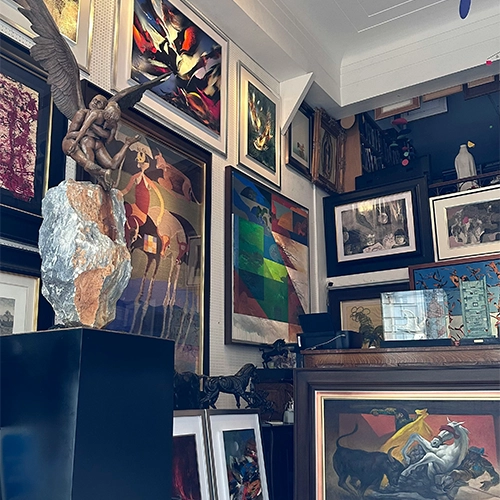
The past few months have been a poignant time for the art world, with the loss of two of its most celebrated figures, David Hockney and Yayoi Kusama. Both artists left an extraordinary mark on contemporary art, inspiring generations of artists, collectors and enthusiasts through their unique creativity. Their passing has been mourned across the global art community and has, unsurprisingly, renewed interest in their legacy.
Yayoi Kusama, also known as the "Polka Dot Lady", became one of the most recognisable artists in the world thanks to her iconic polka dots, immersive Infinity Mirror Rooms and imaginative exploration of themes including repetition, infinity and self-expression. Her exhibitions attracted millions of visitors, transcending the traditional art audience and capturing the imagination of people of all ages.
David Hockney was celebrated for his vibrant landscapes, famous swimming pool paintings and pioneering use of technology, particularly through his iPad drawings. His work had a remarkable ability to find beauty in everyday life, combining colour, light and optimism in a way that resonated with audiences around the world. Few artists have left such an enduring mark on British and international art, cementing his status as a defining figure of his generation.
The loss of these two cultural icons cannot be understated and has been felt beyond the art community. Their passing also raises an important question for collectors and the market: what happens to the value of an artwork when the artist is no longer here?
Why does an artist's death affect value?
One of the realities of the art market is that an artist's death has a significant effect on demand and, in turn, the value of their work. There is never any guarantee that prices will rise, but the passing of a prominent artist often brings renewed attention from collectors, museums, galleries and investors.
A useful comparison can be made with the luxury watch market. As we explored in our article, Keep a watch out: Rolex’s second price rise of 2026, watches from brands such as Rolex and Patek Philippe can increase significantly in value when demand for specific models exceeds supply. In the art world, the tensions on supply and demand can be even more pronounced.
Unlike many other luxury assets, the supply of an artist's work stops completely when they die. No new paintings, sculptures or drawings will ever be created. The body of work is fixed forever, leaving collectors to compete for a finite number of pieces. While values are influenced by many factors, increased demand combined with fixed supply can place significant upward pressure on prices.
An artist's death can also lead to major retrospective exhibitions, increased media coverage and renewed academic interest, all of which help keep their work firmly in the public eye. For collectors who own works by a sought-after artist, these changes can have a meaningful impact on market values.
What does this mean for insurance?
For collectors, this serves as a timely reminder of the importance of keeping valuations up to date. A work that was valued several years ago may no longer accurately reflect its current market value, particularly where the artist has experienced significant growth in demand or has recently passed away. If values rise and insurance arrangements are not reviewed, there is a risk that a collection could become underinsured, potentially leaving owners exposed in the event of a loss.
This is where specialist fine art insurance can prove particularly valuable. Many high-net-worth insurers offer some form of Death of the Artist protection, designed to help bridge the gap between an artwork's insured value and its potentially increased market value following the death of the artist.
However, not all insurers approach this cover in the same way. Some policies provide a dedicated Death of the Artist extension that automatically increases the amount available in the event of a claim, while others incorporate the protection through broader appreciation clauses or extended replacement value provisions. Depending on the insurer, the additional protection can vary considerably, with some offering uplifts of around 50% and others providing up to 200% of the insured value, typically subject to conditions such as a recent professional valuation and agreed maximum limits.
For collectors, this highlights the importance of understanding the detail of their policy wording and reviewing valuations regularly, particularly following the death of a prominent artist, when market demand and values can change rapidly.
Recent conversations with clients following the deaths of David Hockney and Yayoi Kusama serve as a timely reminder of how quickly circumstances can change within the art market. The loss of two of the art world's most influential figures has been felt around the globe and highlights the importance of ensuring collections remain accurately valued and appropriately protected.
While valuations are an important part of protecting a collection, they are only one aspect of a broader risk management strategy. Physical security, storage arrangements and protecting artworks from theft remain equally important considerations for collectors. You can read more in our article, What recent art thefts can teach collectors about protecting their collections.
In an ever-evolving art market, regular valuations and specialist insurance advice remain essential in helping collectors preserve and protect the collections that matter most. If you would like to discuss the value of your collection, arrange an updated valuation or review your insurance arrangements, please do get in touch.
Call 020 8256 4901 or email privateclients@howdeninsurance.co.uk
Related Products
Key to our success is our exemplary service, made possible by a team of people who have the character and skill to manage, meet, and exceed the expectations of our clients.
Whether you own a single piece of art or an entire collection, find out how we can source you a fine art insurance policy that suits you.
What is a professional home contents valuation and why does it matter?
What recent art thefts can teach collectors about protecting their collections