

12 November 2026
Beyond insurance: understanding the world of performance cars
4 minutes

At Howden, our interest in high-performance and specialist cars goes well beyond insurance. We speak to people across the automotive world to better understand the vehicles our clients own, the experiences they enjoy and the risks that come with them.
As part of that conversation, we spoke to Paul Ripley, founder of Driving Masterclass and SuperLicence.com, about an aspect of performance car ownership that can sometimes be overlooked: the person behind the wheel.
Drawing on more than 45 years in advanced and high-performance driver development, Paul explains why driving a modern performance car is about much more than technical ability. Judgement, awareness, restraint and mindset all play an important part in protecting both driver and vehicle.
Beyond the car: why driver development matters
For drivers who own modern supercars and high-performance vehicles, the question is no longer simply whether they can drive. The more important question is whether they possess the judgement, discipline, cognitive awareness and behavioural control necessary to manage extraordinary levels of performance safely and consistently.
Today's performance cars are remarkable machines. They offer levels of acceleration, braking, grip and electronic sophistication that would have been almost unimaginable a generation ago. Yet the capability of the vehicle can easily exceed the capability of the person behind the wheel.
That disparity represents one of the most important areas of modern driver risk.
For more than 45 years, I have worked at the highest levels of advanced and high-performance driver development, partnering with major vehicle manufacturers, international organisations, insurers, specialist automotive businesses and thousands of private owners. My career has taken me from public-road coaching to proving grounds, circuits, vehicle launches, manufacturer programmes and specialist driver development events throughout the UK and internationally.
During that time, vehicle technology has changed almost beyond recognition, yet human behaviour and driving mastery has not. And that is precisely why the next generation of advanced driver development must go considerably further than teaching technique.
Skill is only part of the equation
A genuinely accomplished driver certainly requires strong practical skills. They need to understand braking, steering, vehicle balance, weight transfer, grip, acceleration, cornering, observation and positioning. They should know how a car responds when grip is reduced, how electronic safety systems operate and how their actions influence the chassis.
Knowledge matters too. Understanding tyre behaviour, road surfaces, weather conditions, braking distances, visibility, vehicle dynamics and the limitations of both driver and machine create a stronger technical foundation. But skill and knowledge alone do not create a master driver.
The decisive factor is mindset.
Why mindset matters
Some of the greatest risks associated with powerful cars are behavioural rather than mechanical. Confidence can become overconfidence and familiarity can reduce concentration. Status can create an unconscious expectation that technology will compensate for poor judgement. Excitement can influence speed selection and impatience can alter decision-making.
A driver may therefore possess considerable technical ability while still presenting an unnecessarily high risk. The highest level of driver development addresses these factors directly.
It involves learning to manage the cognitive processes taking place before any physical driving input occurs, so visual scanning becomes deliberate, anticipation becomes better planned and more structured and better constructed decisions can be made earlier. These factors ensure risk management is evaluated continuously rather than reactively.
The driver learns not merely to control the vehicle, but to control themselves and their emotions.
Creating cognitive headroom
This means developing what might be described as cognitive headroom: maintaining sufficient mental capacity to observe, analyse, predict and respond before a situation becomes critical.
A master driver is constantly asking questions. What is developing ahead? What could change? What information am I missing? Where is the greatest threat? What escape options exist? Is my speed appropriate not merely for the legal limit, but for the circumstances, visibility, surface and available stopping distance?
These thought processes eventually become embedded into driving behaviour and create a sixth sense of situational awareness. The result is something far more valuable than fast reactions. It is the reduced need for reactions in the first place.
Advanced driving as risk management
That distinction is particularly important for insurers of high-performance and prestige vehicles where advanced driver development should ultimately be regarded as a form of risk management. Its purpose is not to encourage drivers to exploit performance irresponsibly. It is to ensure that when individuals own vehicles possessing exceptional capabilities, their own capabilities develop accordingly.
This includes attitude, restraint, emotional control, situational awareness and the willingness to recognise when performance should not be used.
In my experience, the very best drivers are rarely those attempting to demonstrate how fast they can travel. They are the individuals who make driving appear calm, precise and almost effortless because the ‘thinking and planning’ has already taken place.
Their braking is progressive. Their steering is measured. Their positioning is deliberate. Their observation is expansive. Their decisions are made early.
Most importantly, their ego does not dictate their actions.
After more than four decades working with performance drivers and some of the world's most respected automotive organisations, one principle has remained constant: great driving is fundamentally about reducing uncertainty.
Technique gives the driver control of the car.
Knowledge gives them understanding.
Experience gives them perspective.
But mindset determines how intelligently all three are used.
For owners of today's most capable performance vehicles, that combination represents the real evolution of advanced driving. It is the transition from simply being skilled behind the wheel to becoming a genuinely complete driver: technically capable, cognitively sharp, behaviourally disciplined and constantly engaged in the intelligent management of risk.
That is where performance driving becomes something considerably more sophisticated.
It becomes mastery.
Paul Ripley - www.paulripley.co
Founder, Driving Masterclass. SuperLicence.com
Advanced & High-Performance Driver Development
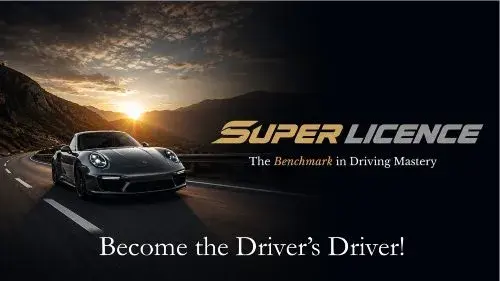
Protecting more than the car
For us, specialist vehicle insurance is only part of the conversation. Understanding how cars are driven, enjoyed, maintained and protected helps us have better conversations with our clients about the risks that surround ownership.
That means staying connected to the wider automotive world, from learning from specialists such as Paul Ripley to supporting communities that share our clients' enthusiasm for exceptional cars. Our sponsorship of Kidd in a Sweet Shop is part of that, bringing us closer to the people, experiences and conversations that make car ownership about much more than the vehicle itself.
It is also why we continue to engage with people from across the automotive world, from specialists such as Paul Ripley to enthusiasts and voices within the car community. Because when our clients are passionate about cars, we think it matters that we are too.
To speak to us about your car insurance call, 0330 008 4764 or email privateclients@howdeninsurance.co.uk
Related Products
Whether it’s a single, high-performance supercar insurance policy you are looking for, or an all-in-one policy to cover a personal collection of supercars, we can help.
The value of a personal claims service for high-value vehicles
Is your supercar keeping up with the market? Why agreed value reviews matter more than ever
Car modifications and insurance: what you need to know