

30 April 2026
Protecting Your Home from Wildfires
4 minutes
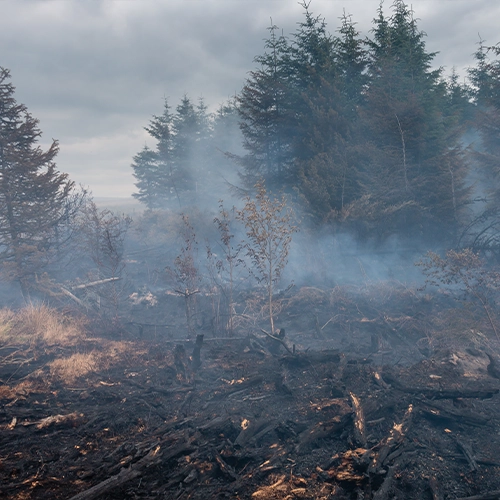
As the UK experiences warmer, drier periods more frequently, there is a growing concern that wildfires could become larger and more intense in certain parts of the country.
Wildfire risk in the UK is monitored by the Met Office’s Fire Severity Index (FSI), which assesses the risk of a wildfire spreading. The index maps conditions across the UK, with some areas at times classified as “very high” risk. You can check current conditions in your area using the UK Fire Severity Index
Although the UK generally experiences fewer wildfires than hotter, drier regions, they do occur - and recent years have shown how serious the impact can be. 2025 was the most severe wildfire year on record with around 26,000 grassland, woodland or crop fires, accounting for approximately 116,000 acres burned, more than double the previous 2022 record1. These fires were largely driven by the driest spring for a century combined with prolonged periods of dry, sunny weather.
Importantly, most wildfires in the UK are linked to some sort of human activity, whether accidental or deliberate. Combined with increasingly dry conditions, this means wildfire risk is becoming a growing consideration for rural property owners, land managers and those living close to open countryside.
Practical steps to reduce wildfire risk
If you live near farmland or heathland, there are practical steps you can take to reduce the impact of a wildfire should one occur.
- Repair or replace any loose or broken roof tiles, which could allow burning embers to enter roof spaces.
- Clear gutters and roof valleys regularly, as dry leaves and debris can ignite easily.
- Move flammable materials - such as leaf piles, compost heaps and stacked logs - away from the exterior walls, fences and outbuildings.
- Ensure your house name or number is clearly visible from the road, making it easier for emergency services to locate your property quickly.
- Do not park over or near fire hydrants, which are marked by a black “H” on a yellow sign. Keeping these accessible can be critical during an emergency.
Garden maintenance
Garden maintenance plays an important role in wildfire risk management. Dry vegetation can allow fire to spread more quickly, particularly during prolonged periods without rainfall.
Grass fires burn quickly because of how fine it is. The taller and drier the grass, the more intensely it will burn and the higher the flame height, making fires harder to control. Shorter grass generally burns with lower intensity and is easier for fire crews to manage.
According to the Devon & Somerset Fire and Rescue services, grass kept below 10cm presents a lower wildfire risk, particularly during dry conditions. Maintaining your garden is therefore an important preventative measure. If you’re concerned about overgrown grass near your home, cut grass back and trim any hedges or plants to create more space between your property and the overgrown area.
Further advice is available from the Devon & Somerset Fire and Rescue Service
General fire safety measure for your home
Alongside steps to reduce wildfire exposure, it’s equally important to ensure your home is protected from more general fire risks.
- Test your smoke detectors regularly and consider installing a heat detector in the kitchen. Home insurers often have requirements relating to fire detection, which can vary. We’ve put together some guidelines which you may find useful: Fire Detection and Insurance
- Consider Grade F1 radio-interlinked smoke and heat detectors, so that if one detector is activated they all go off. These have become more affordable in recent years and do not require hard wiring.
- Keep at least one fire extinguisher near an escape route. Owners of thatched properties should check their insurance schedule for any specific fire-safety requirements.
- Take care when charging e-bikes and scooters, following London Fire Brigade guidance on safe charging practices. We also share additional advice in our article on e-bike and e-scooter safety
Bonfires in war, dry weather
Bonfires can pose an increased fire risk during periods of warm, dry weather and should be avoided when conditions are particularly hot or windy.
If conditions allow for a bonfire to be lit, sensible precautions can help reduce risk:
- Use a metal incinerator to help contain the fire
- Position it at least 10m away from anything flammable, including trees, dry grass, fences, sheds, garages, vehicles and buildings.
- Never leave a bonfire unattended.
- Do not use petrol or other accelerants to start and review the fire.
- Keep water or a hose nearby in case the fire needs to be controller quickly.
Fire services also provide guidance on what materials should or should be burned. This advice is available here: https://www.dsfire.gov.uk/safety/home/bonfires
Barbeques, fire pits and outdoor cooking
Barbecues and fire pits can increase the risk of fire during warm, dry weather. Taking simple precautions can help reduce that risk.
If you plan to use a barbecue or fire pit:
- Place it on a stable, level surface, away from buildings, fences, sheds, dry grass and over hanging trees.
- Do not leave it unattended
- Keep a bucket of water, hose or suitable extinguisher nearby
- Make sure fires are put out safely
- Remember to avoid leaving empty glass bottles or similar items outdoors, as they can reflect sunlight onto dry grass or other combustible materials and potentially start a fire.
Thatched homes: additional considerations
If you own a thatched property, your home insurance policy is likely to have specific fire-related clauses relating to barbecues, firepits, bonfires, chimineas, incinerators or patio heaters. These typically state that no fire under your control can be lit within a specified distance of the property. If they are not followed and a fire occurs, you may find yourself uninsured. It is therefore especially important for owners of thatched homes to understand and comply with any fire‑related conditions that apply to their cover.
Thatched properties may be subject to additional requirements or endorsements, reflecting their construction and higher fire risk. For more information on this, you may find it helpful to read our article: Ways to manage your thatch home insurance premium | Howden Insurance
Support for fire risk and home insurance
Through our Risk Management team, we provide practical guidance to help homeowners reduce fire risk and better understand how their insurance policy will respond in the event of a claim. Where appropriate, we can also introduce specialist partners who advise on and install fire detection and alarm systems that meet both property needs and insurer expectations.
If you would like to discuss your home insurance or review your cover in light of fire‑related risks, our Private Client team would be happy to help.
Source

Steve Moores
Steve Moores ACII leads Howden’s Private Client Risk Management team, advising clients on how to reduce exposure to loss and better understand the risk considerations that sit alongside complex and high-value home insurance arrangements.
Related Products
Key to our success is our exemplary service, made possible by a team of people who have the character and skill to manage, meet, and exceed the expectations of our clients.
Protecting your property: fire safety and insurance advice
Fire Detection and Insurance