
04 March 2026
Coloured gemstones: Origin matters
5 minutes
When you look at your jewellery collection, do you know the significance of origin when it comes to the Big Three coloured gemstones, asks Sworders Head of Jewellery Valeria di Cola.
Location, location, location. The geographical origin of fine quality and rare coloured gemstones always drives higher prices in the auction market – but so often my clients do not know what they have got!
Many times clients come to me for valuations or to sell a piece of antique or vintage jewellery at auction and they have not realised the potential for a highly collectable geographic origin from Kashmir to Burma (Myanmar), Colombia to Sri Lanka (formerly Ceylon).
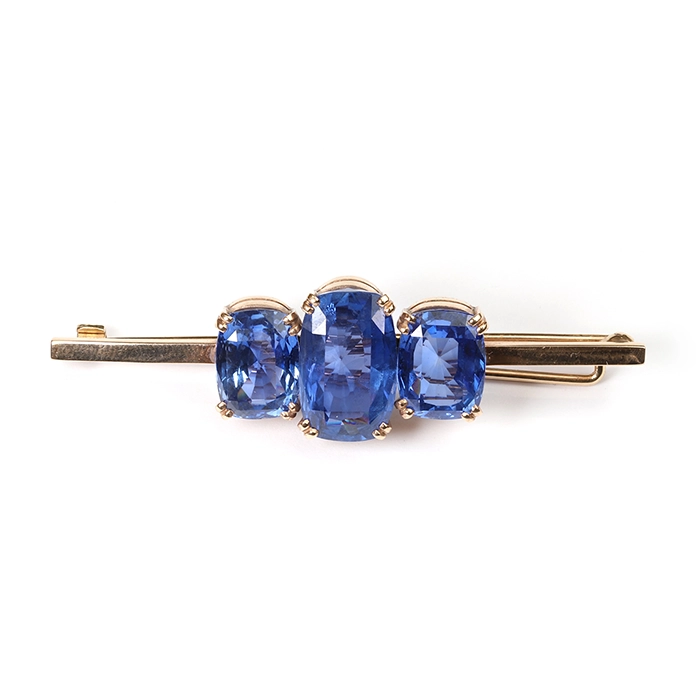
Sapphires, emeralds and rubies are the most coveted for their beauty and rarity, but their origin adds hugely to the value. One of the nice discoveries from our jewellery sales in 2025 included a three-stone sapphire brooch brought in by a client. It was a family heirloom, bought in Sri Lanka (formerly Ceylon) during the 1940s. Its distinctive cornflower blue hue and characteristic inclusions immediately raised questions, prompting me to submit it to a gemological laboratory for origin analysis. It was confirmed as a natural unheated Ceylon sapphire (modern-day Sri Lanka). I love that part of my job, identifying something special and getting confirmation from the lab! It is certainly the right course of action to get a proper valuation and identification from an expert.
|
(Image: Ceylon three-stone sapphire brooch fetched £12,000 at Sworders’ June 2025 auction) |
Gems from historical mines that are now depleted can be found in the secondary market and they can attract high prices. Auctions are a good place to start.
Sapphires are extremely popular due to their deep blue colour with high brilliance. Probably one of the most famous sapphires is mounted in the engagement ring that was worn by Diana, Princess of Wales, a 12-carat oval blue sapphire surrounded by diamonds. William, the Prince of Wales, gave Katherine his mother’s ring to mark their engagement.
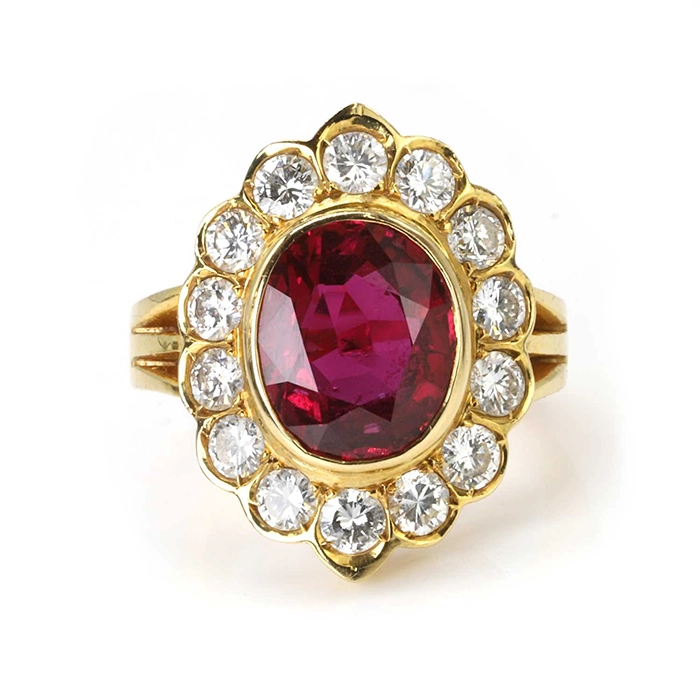
The allure of rubies, for their rich, vibrant red hue and durability always attracts buyers. Rubies are also the July birthstone.
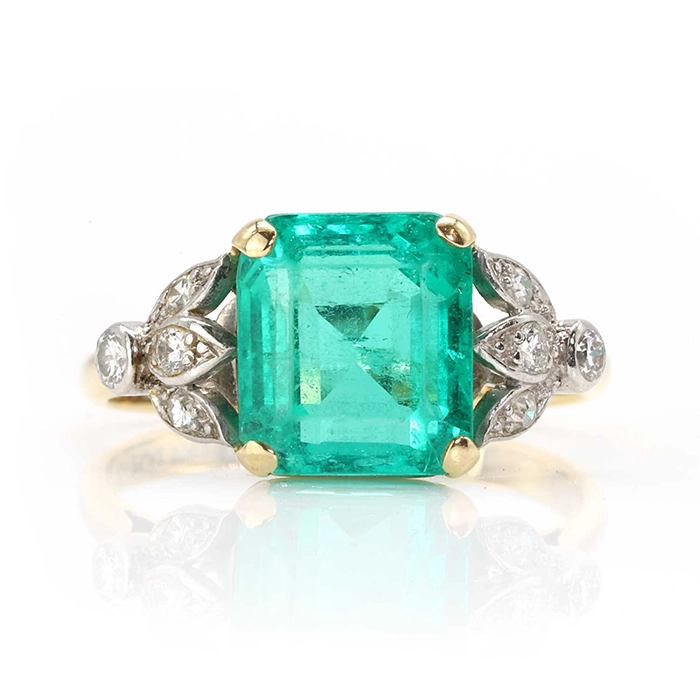
Emeralds are valued for their unique, intense green colour, caused by chromium and vanadium. Fine quality emeralds can command huge prices, especially if Colombian and untreated. They have been the gem of choice of celebrities, notably Elizabeth Taylor’s Colombian emerald and diamond ring, by Bulgari, which sold for more than three million US dollars at the sale of The Collection of Elizabeth Taylor some 15 years ago.
|
(Image: A Colombian emerald and diamond ring, fetched £4,000 at Sworders’ auction in June 2025.) |
When the Big Three gems are found in an antique or vintage Jewellery heirloom, they have the potential to be from a highly collectable geographic origin, such as Sri Lanka (formerly Ceylon), Burma (Myanmar) or even the very sought-after Kashmir.
Plus, when it comes to the highest prices, unheated/untreated stones drive the top bids at auction. These gemstones have not been subject to artificial heat so they are in the purest form, as discovered in nature. These stones can contain typical inclusions which are uneven in colour or minor flaws which are clues when I might suspect a particular origin.
|
(Image: A ruby and diamond cluster ring fetched £2,200 at Sworders’ auction in November 2025) |
Alternatives to the Big Three
Other highly sought-after coloured gems of interest are tourmaline, aquamarine and topaz.
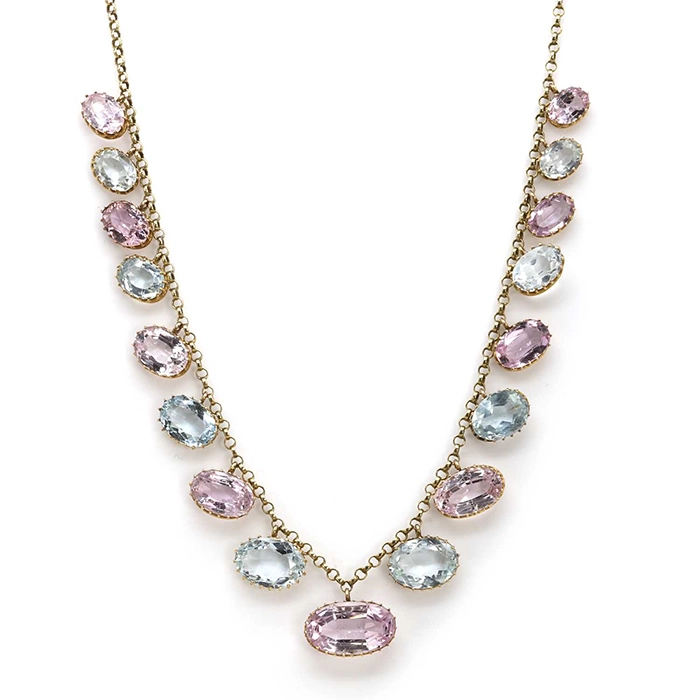
Look out, too, for imperial and pink topaz, which are frequently seen in antique jewellery, particularly in 19th and early 20th-century rivière and fringe necklaces. These pieces are highly collectable and often attract intense competition at auction.
|
(Image: A pink topaz and aquamarine necklace, c.1900 fetched £3,200 at Sworders’ June 2025 auction) |
New gems to consider
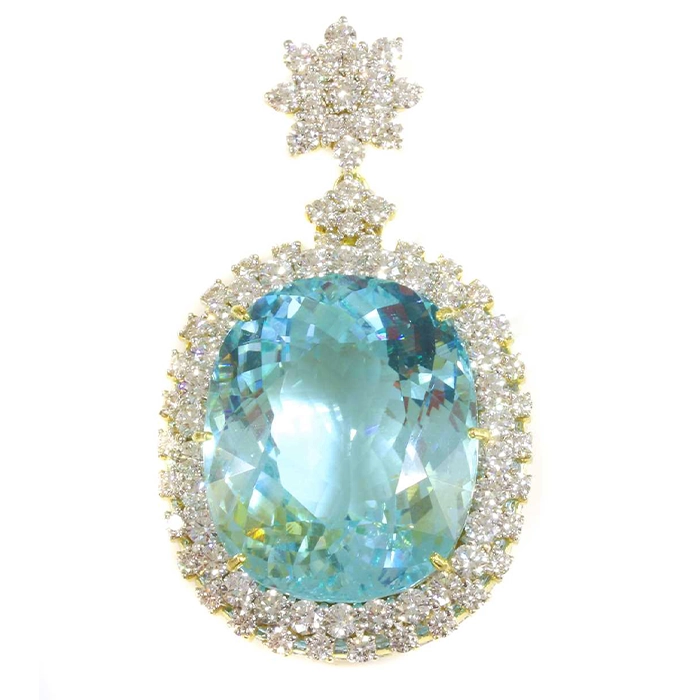
Paraiba Tourmaline is the vivid blue to green copper-bearing variety of tourmaline, with an attractive neon blue hue mined in Brazil, Mozambique and Nigeria. Prices have been rising for 30 years and they have become very sought-after at auction.
In 2021, Sworders offered a Paraíba tourmaline and diamond pendant for sale, which achieved £27,000 plus fees.
|
(Image: A Paraíba tourmaline and diamond pendant sold for £27,000 plus fees at a Sworders’ auction) |
Mahenge spinels, from Tanzania, are an attractive pinkish red variety of spinel on the rise among gemstone investors. These premium gems are renowned for their intense, vibrant pink-to-red neon glow, high clarity and superior brilliance. They were only discovered around 2007 and are popular in high-end jewellery due to their unique colours. I look forward to them coming through to auction soon!
If you have any coloured gemstone heirlooms it is really is worth checking their origin and their value. It can be intriguing and so often, surprising!
Contact Valeria di Cola at ValeriaDiCola@sworder.co.uk
About Sworders
The fine art auction house has an international reputation and a legacy dating to 1782.
Sworders has a central London gallery while the head office and auction rooms are in Stansted Mountfitchet, Essex. The valuations office is in Hertford.
Sworders’ calendar of events includes Jewellery, Fine Wine and Spirits, British and European paintings, Fine Furniture and Works of Art, Modern and Contemporary Art and Asian Art.
The auction house combines expertise and experience with a commitment to achieving the best auction results for clients by marketing collections to prospective purchasers around the globe.
Diary date
Sworders’ next Fine jewellery auction is on June 2, 2026
Visit sworder.co.uk
Jewellery Insurance and valuations
Recent market movements mean many people are unaware of what their jewellery is truly worth. Gold prices went above $5,000 per ounce in February 2026 with silver breaking historic records too1. With values rising so rapidly, older valuations may no longer reflect the true worth of your jewellery or heirlooms, increasing the risk of being underinsured.
Insurance for high-value pieces can depend on having accurate, up-to-date valuations. An up-to-date valuation not only prevents underinsurance but helps make any related claim run more smoothly. A valuation should include a description, weight, size and a photograph, the date and the valuer’s name and credentials.
If you’d like to dive deeper into how jewellery insurance works - including limits, specifying items, and what to check in your policy - you can read our guide: Ensuring your jewellery insurance shines when you need it most
How we can help
While insurance can never replace the sentimental value of a treasured piece, the right cover protects you from the financial impact of loss - whether you need a replacement, repair, restoration or compensation for any reduction in value.
At Howden, we take the time to understand your collection, review your policy and make sure limits are set correctly. And if you ever need to make a claim, our dedicated specialist team will support you throughout.
Whether your gemstones come from Kashmir, Burma, Colombia or closer to home, we make sure their provenance and value are accurately captured, so your insurance reflects what they truly mean to you.
To speak to us about your jewellery insurance call 020 8256 4901 or email privateclients@howdeninsurance.co.uk
Source:
1. Gold Price in February 2026 - Historical Chart and Market Analysis

Julie Webb
Working in a key ambassadorial role, Julie focuses on business development within the Private Clients division, working with like-minded professional referrers and building connections.