
22 January 2026
Time waits for no man
7 minutes
We explore the fascinating world of clocks and timepieces with Leighton Gillibrand, head of Clocks, Barometers & Scientific Instruments at Dreweatts auction house.
Knowing the time through mechanical means has pre-occupied man for over half a millennium. Although finding the time using the sun can be traced well back into ancient times the establishment of the mechanical timepiece really came about through a surprising need, which essentially led to the birth of the clock as we know it today.
During the late Gothic period in Europe, the church presided over society and created structure for the day based around times of prayer. This created a need for a device to announce these times through sounding on a bell, as sound travelled far and could be understood in a society where most would have not been able to read a dial. Thus the first ‘church’ clocks appeared in central southern Europe in mid to late 15th century to serve this purpose.
The fact that the earliest clocks tended to announce the time by sounding on bells was the genesis of the name ‘clock’ which was derived from the German name for a bell ‘glocke’. Indeed, for us horologists a clock to be worthy of its name it has to strike in some way, if it silently tells the time using a dial alone then it is a timepiece.
|
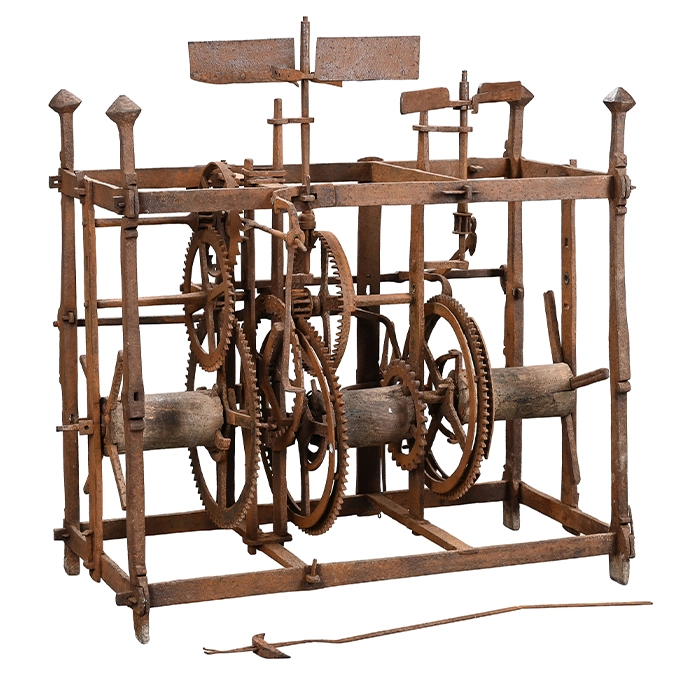
(Image: A rare Charles II wrought iron church tower or turret clock circa 1665. Sold at Dreweatts 1759 for a hammer price of £5,500, September 12, 2024) |
Ever since their introduction clocks have been at the spearhead of mechanical and technological development as well as an expression of wealth and status. Among modern-day collectors the most prized examples originate from what is termed the English ‘golden period’ of the 17th century.
It was during this period that London became established as the global centre for clockmaking cemented by the formation of the Worshipful Company of Clockmakers in 1631. It was in London that the first longcase (or ‘grandfather’) clock was made shortly after the introduction of the pendulum in 1658.
Early longcase clocks by leading London makers such as Ahaseurus Fromanteel, Edward East, Joseph Knibb, Thomas Tompion and William Clement are very highly prized amongst collectors.
During the 18th century solidification of maritime power through the quest to find longitude became a driving force for technological development. No doubt the reader is aware of John Harrison and his dogged determination to create an extremely accurate timepiece that can withstand the rigours of being at sea. Indeed, he and his successors were pivotal in contributing to the ‘upper hand’ of maritime power to the British as well as laying the foundation to the establishment of precision watchmaking.
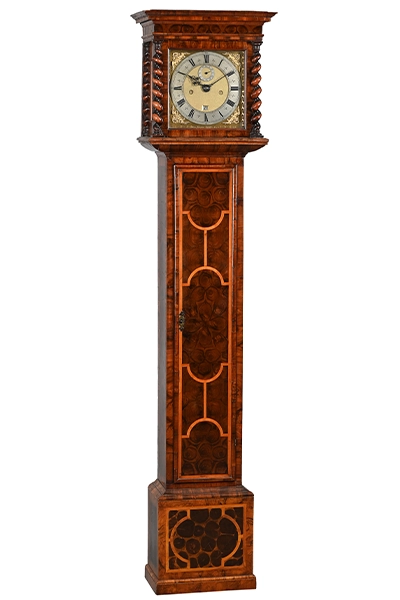
(Image: A fine Charles II inlaid olivewood small month-going longcase by Thomas Tompion, London, circa 1688. Sold at Dreweatts 1759 for a hammer price of £55,000, September 12, 2024)
|
(Image: A fine Charles II inlaid olivewood small month-going longcase by Thomas Tompion, London, circa 1688. Sold at Dreweatts 1759 for a hammer price of £55,000, September 12, 2024) |
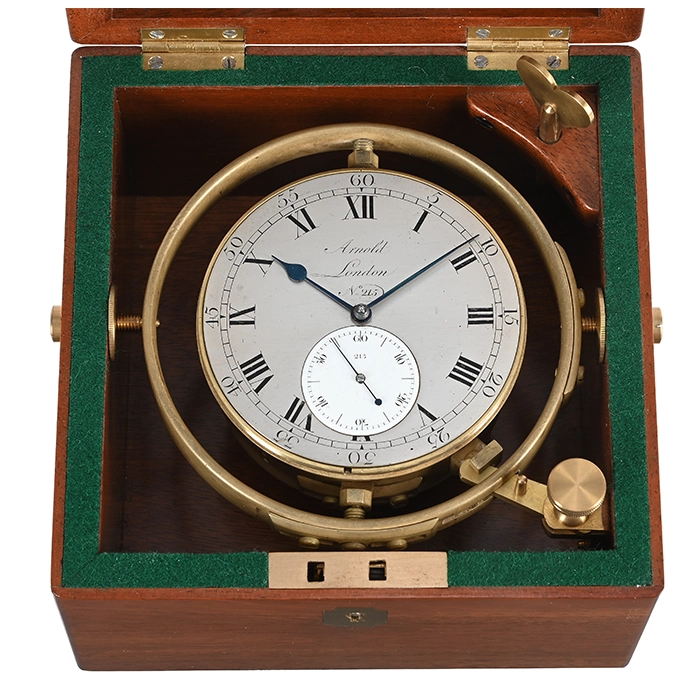
(Image: A rare Napoleonic period one-day marine chromometer by John Roger Arnold, London, circa 1804. Sold at Dreweatts 1759 for a hammer price of £7,500, March 25, 2025) |
The industrial revolution allowed regional genius to shine along with the powerhouse of industry to developed in central and northern England. Enlightenment was embodied by the establishment of the likes of the Birmingham-based Lunar Society in 1765, which included eminent innovators such as Josiah Wedgwood, James Watt, Matthew Boulton and the Derby-based clockmaker John Whitehurst.
As industry expanded clocks and timepieces became much more accessible. This was further compounded by huge growth in international trade allowing the import of very diverse range of timepieces from France, Germany, and beyond.
Areas of interest
The modern-day collector can choose from an almost endless variety of clocks and timepieces of all shapes, sizes and prices. Longcase clocks from the end of the 18th century onwards are remarkably good value with a good eight-day example costing from as little as £400-500 at auction.
The classic Georgian or Regency bracket clock is also a good choice for buyers looking for understated quality with a budget of £1,000-2,000. For those who have a fondness for English work but want something a little different then a skeleton clock might fit the bill.
|
(Image: A fine George III mother-of-pearl and tortoiseshell inlaid musical eight-day longcase clock by Christopher Hawkesworth, Bristol area, circa 1780. Sold at Dreweatts 1759 for a hammer price of £2,400, September 9, 2025) |
(Image: A George III gilt brass and painted wood balloon-shaped mantel clock by James Henderson, London, circa 1785. Sold at Dreweatts 1759 for a hammer price of £2,000, September 9, 2025) |
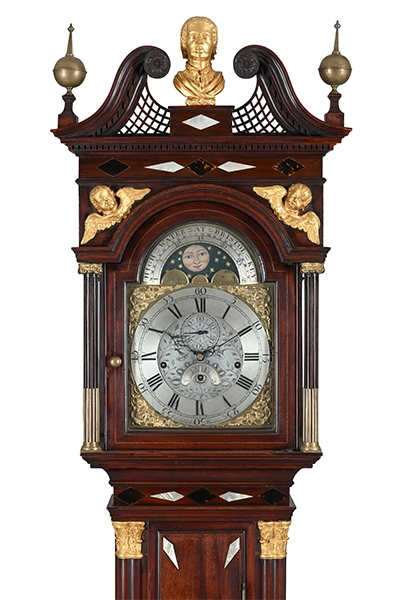
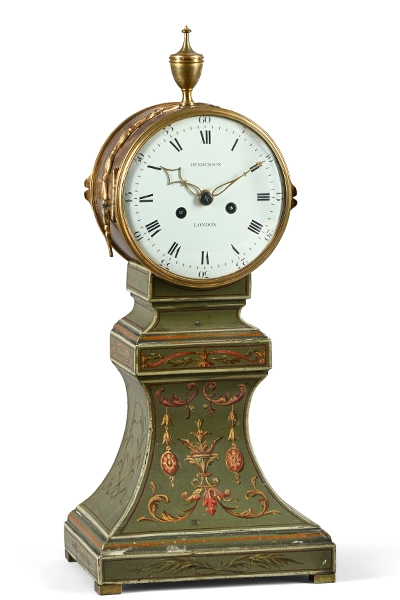
France was a major centre for the manufacture of clocks and timepieces throughout the 19th century hence French clocks provide the collector with a vast selection to choose from. Carriage clocks in particular present buyers with the opportunity to build a collection just around one type of timepiece. With prices starting from around £100 rising up to more than £10,000 the choice is endless due to the huge variety of decorative techniques used within the cases, and specifications of the movements.
|
(Image: A fine French engraved gilt brass giant grande-sonnerie striking calendar carriage clock with alarm retailed by Tiffany, New York, circa 1890. Sold at Dreweatts 1759 for a hammer price of £6,500, September 9, 2025) |
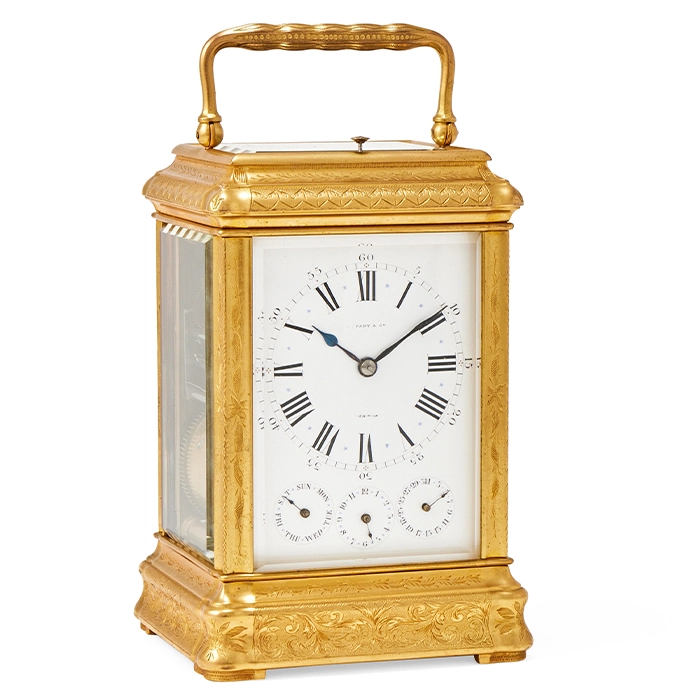
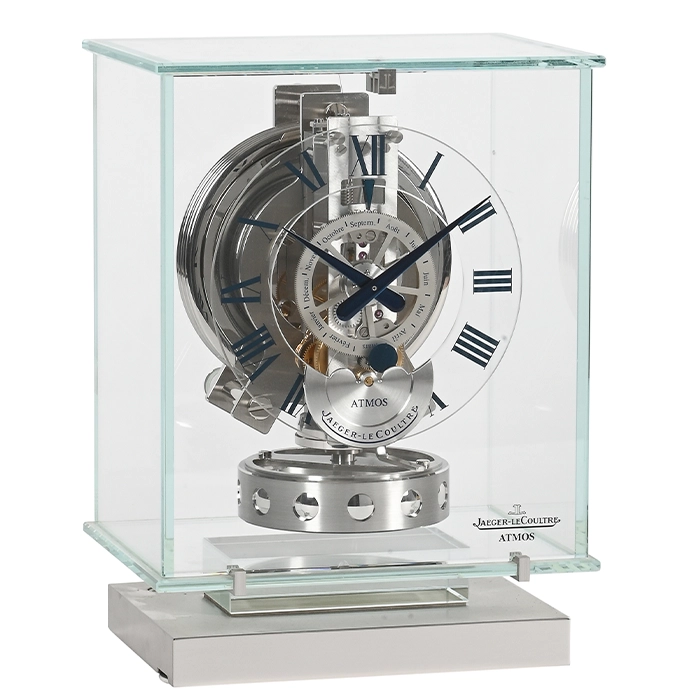
For those who are looking for something more contemporary then they may want to consider an ‘Atmos’ timepiece. These have been made by the celebrated Swiss watch and clockmaker Jaeger-LeCoultre sine the 1950’s and are of an ingenious design as they utilise change in atmospheric pressure to keep them wound. Prices at auction for these tend to start from around £700.
|
(Image: A rare Swiss glass and chrome plated ‘Atmos Classique Phases de Lune’ timepiece by Jaeger-Le Coultre, Geneva, circa 2008. Sold at Dreweatts 1759 for a hammer price of £5,500, September 12, 2024) |
|
|
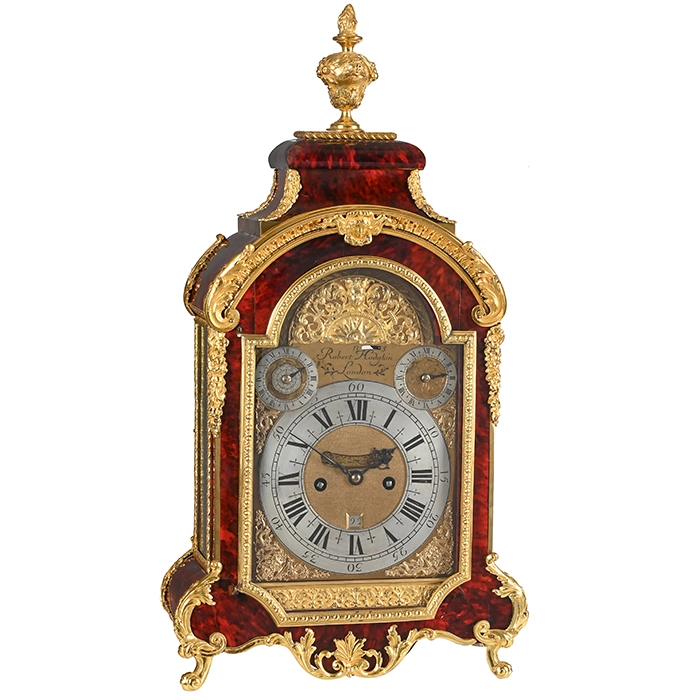
Advice for BuyersThe first piece of advice is always buy what you like! Appeal could purely be based on aesthetics, or indeed further appreciation of the mechanical aspects of the timepiece. It is often the case that collectors interest evolves as they come to learn more about the pieces in their collection. This is the fun part as timepieces are a source of endless opportunities for investigation that would satisfy the most curious of minds. Secondly, for those entering the field, it is best to buy examples in the fine working condition. Originality is also very important hence why it is always best to purchase from a trusted reliable source. Although restoration projects may seem tempting, they could prove to be a bit of a false economy hence best left to those who fully understand the work involved. And finally, if the technological aspects of clockwork are of particular interest, it may be worth befriending a local clockmaker/horologist. Often they are happy to discuss their work as well as provide an opportunity to see the mechanism of a clock removed from its case and dismantled. Indeed, they may well be able to provide an inexpensive ‘scrap’ movement for examination allowing the technical aspects to be understood in a purely hands-on manner. This is often the best way to start to understand how clocks work and the differences in their designs. One slight word of warning though, horology can be addictive so be prepared to lose track of time getting to understand how others have sought to measure time! (Image: Tortoiseshell table bracket clock by Robert Hodgkin – detail of movement (Lot 1252 12/09/2024)) |
About the author
Leighton Gillibrand is head of Clocks, Barometers & Scientific Instruments at Dreweatts auction house which holds two specialist auctions a year. Over the 15 years he has been conducting these sales, Leighton has established himself to become one of the most widely respected auction specialists in this field.
In addition to horology Leighton’s interest also encompass architecture, maritime history and classic cars. When not researching an antique timepiece, he can most likely be found in the garage tinkering on his latest project!
About Dreweatts
Dreweatts auction house was established in 1759 and is one of the foremost auction houses in the UK. It comprises 22 specialist departments ranging from Fine Art, Jewellery and Watches, Silver, Wine, Books and Manuscripts, British & European Ceramics & Glass, Modern Design & Decorative Art, Ephemera, Furniture, House Sales & Collections, Clocks, Barometers and Scientific Instruments, Asian Ceramics and Works of Art.
It holds regular specialist sales, totalling more than 70 sales per year including curated Interiors sales, single owner collections and house sales.
Dreweatts is a member of the Gurr Johns group of international art advisory businesses with its main saleroom at Donnington Priory in Newbury, Berkshire and a London showroom on Pall Mall.
Visit dreweatts.com or contact Leighton Gillibrand at lGILLIBRAND@dreweatts.com
Insurance and valuations
Whether you’re a seasoned collector or just starting your horological journey, these examples show why accurate valuations are important. We recommend updating valuations every three to five years - especially in today’s market - to ensure your treasured pieces are properly protected. But check your schedule and policy wording for specific requirements.
Insurers will require any valuation to be for “insurance purposes” and usually for retail value. Consider how you’d want to replace your collectible in the event of a loss: a modern equivalent (modern replacement value) or an antique replacement (antique replacement value). These choices matter when tailoring your policy.
Photograph your clocks, keep them in good condition, and store documentation securely - these steps make a difference if you ever need to claim. And don’t forget to share copies of your valuations with your broker.
At Howden, we’re here to help you protect what matters most - and when it comes to clocks, every tick deserves the right cover.
To speak to us about your collection call 020 8256 4901 or email privateclients@howdeninsurance.co.uk